Who Is This Guide For?
This guide was prepared in particular for the following profiles:
- Those with wash-induced swirl marks, marring or holograms on their car
- Those bothered by surface defects on black, navy and other dark-colored cars
- Those experiencing micro scratches after automatic brush washes or improper cloth use
- Those buying a used car who want to assess the existing paint surface realistically
- Those who want to plan surface preparation correctly before ceramic coating or PPF
- Those who want to understand the risks of spot paint, touch-ups or previously applied polishing
- Those who want to clarify the difference between compounding/polishing and professional paint correction
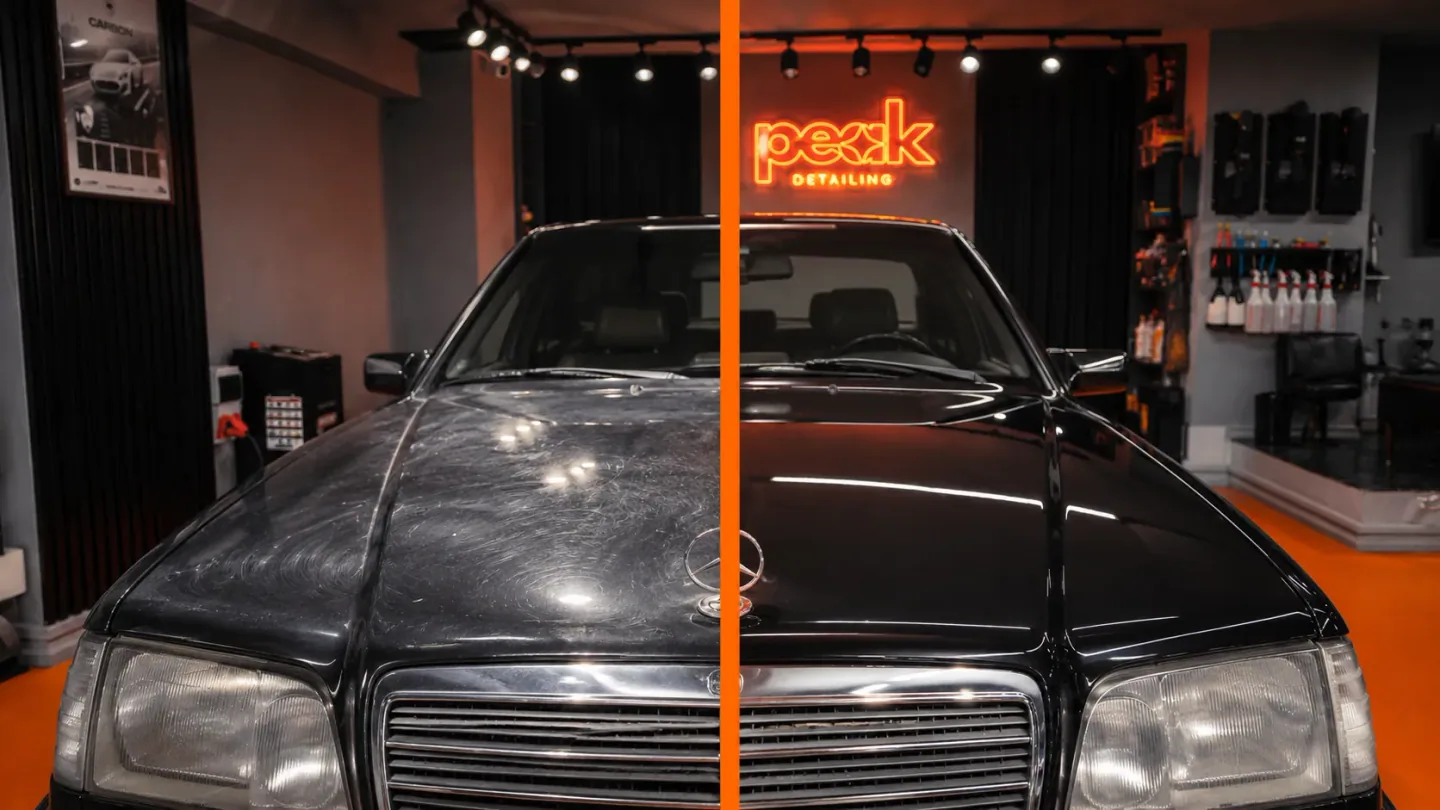
Paint correction reduces the visibility of surface-level defects in the clear coat layer in a controlled way. Not every scratch is the same depth; some defects cannot be fully removed within safe limits. The most aggressive process is not always the right one. After the process, ceramic coating, PPF, sealant or wax can be considered according to the usage profile.
What Is the Difference Between Paint Correction and Compounding/Polishing?
In everyday language, "compounding and polishing" is a broad term used for many different processes. Professional paint correction, on the other hand, analyzes the panel's current condition and aims to apply only as much abrasive work as necessary. The difference lies not just in the machine used, but in measurement, the test spot, surface inspection and the post-handover protection plan.
| Criterion | Surface-Level Compounding/Polishing | Professional Paint Correction |
|---|---|---|
| Goal | Quickly tidy up the appearance | Controlled improvement by analyzing the defect |
| Initial analysis | May be limited | Panel and defect analysis is performed |
| Paint thickness measurement | May not always be done | Assessed in risky areas |
| Test spot | Usually not applied | Done to determine the right combination |
| Machine / pad / product selection | May be a generic approach | Adjusted according to the panel and defect |
| Result expectation | May be a short-term visual improvement | Controlled, measured surface correction |
| Protection stage | May be a wax or quick product | Ceramic, PPF or suitable protection as needed |
What Defects Appear in Car Paint?
Not every mark seen in automotive paint is the same problem. While defects such as swirl marks, marring, holograms and surface-level water spots can remain on the clear coat, stone chips, paint chipping or clear coat cracking require a different repair approach.5,6
Clusters of fine scratches that, especially under light, appear as a circular or spiral pattern. Improper washing and wiping increase the risk.
Linear micro marks that can form as a result of improper washing, a dirty cloth or uncontrolled wiping.
Marks that appear wavy under light, usually after insufficient finishing or faulty machine polishing.
Losses in appearance that can be improved with polishing if the clear coat structure is sound.
Mineral residue left on the surface must be distinguished from a mark that has etched into the clear coat.
Bird droppings, sap and insect residue can leave a permanent effect on the clear coat when left in place.7,8
Deep scratches, stone chips and paint chipping (where there is paint loss); clear coat burn-through or cracking cannot be corrected by polishing. These situations require a different repair method.
Which Defects Can Paint Correction Reduce?
The success of paint correction depends on the type and depth of the defect, the panel's history and the safe clear coat margin. The table below offers a realistic initial assessment; the final decision should be made after inspecting the car.
| Defect | Likelihood of Improvement | Notes |
|---|---|---|
| Light swirl marks | Usually high | Fine marks on the clear coat can be reduced with controlled polishing |
| Hologram | Usually high | Can be reduced with the right machine, pad and finishing product |
| Light marring and micro scratches | In most cases | Depth and safe clear coat margin should be assessed |
| Light oxidation | Depends on the case | Appearance can be improved if the clear coat structure is sound |
| Light water spot | Depends on the case | Mineral residue must be distinguished from a mark etched into the clear coat |
| Bird dropping / sap mark | Depends on the case | Surface marks may be reduced; damage that has penetrated deeper can remain7,8 |
| Sanding mark | Requires expert assessment | Requires controlled work and sufficient clear coat margin9 |
| Deep scratch | Limited | Safe-level reduction or a different repair may be required |
| Stone chip | No | If there is paint loss, a touch-up or different repair is required |
| Clear coat burn-through / cracking | No | Cannot be corrected by polishing |
Problems Paint Correction Cannot Solve
How Are Car Paint and the Clear Coat Layer Structured?
Modern automotive paint systems do not consist of a single layer. On the panel, the primer, the color layer and the clear coat at the very top work together. This layered structure requires appearance and protective performance to be assessed together.5
The carrier surface to which the paint system is applied.
Supports adhesion and substrate preparation.
Carries the car's color and effect appearance.
The topmost transparent layer; polishing works predominantly in this layer. It does not have unlimited thickness.4,9
The goal is not to chase every mark to the end, but to improve the surface in a balanced way within safe limits. Unnecessarily aggressive polishing can remove more material from the clear coat than necessary.
Boya Kalınlığı Ölçümü Neden Önemlidir?
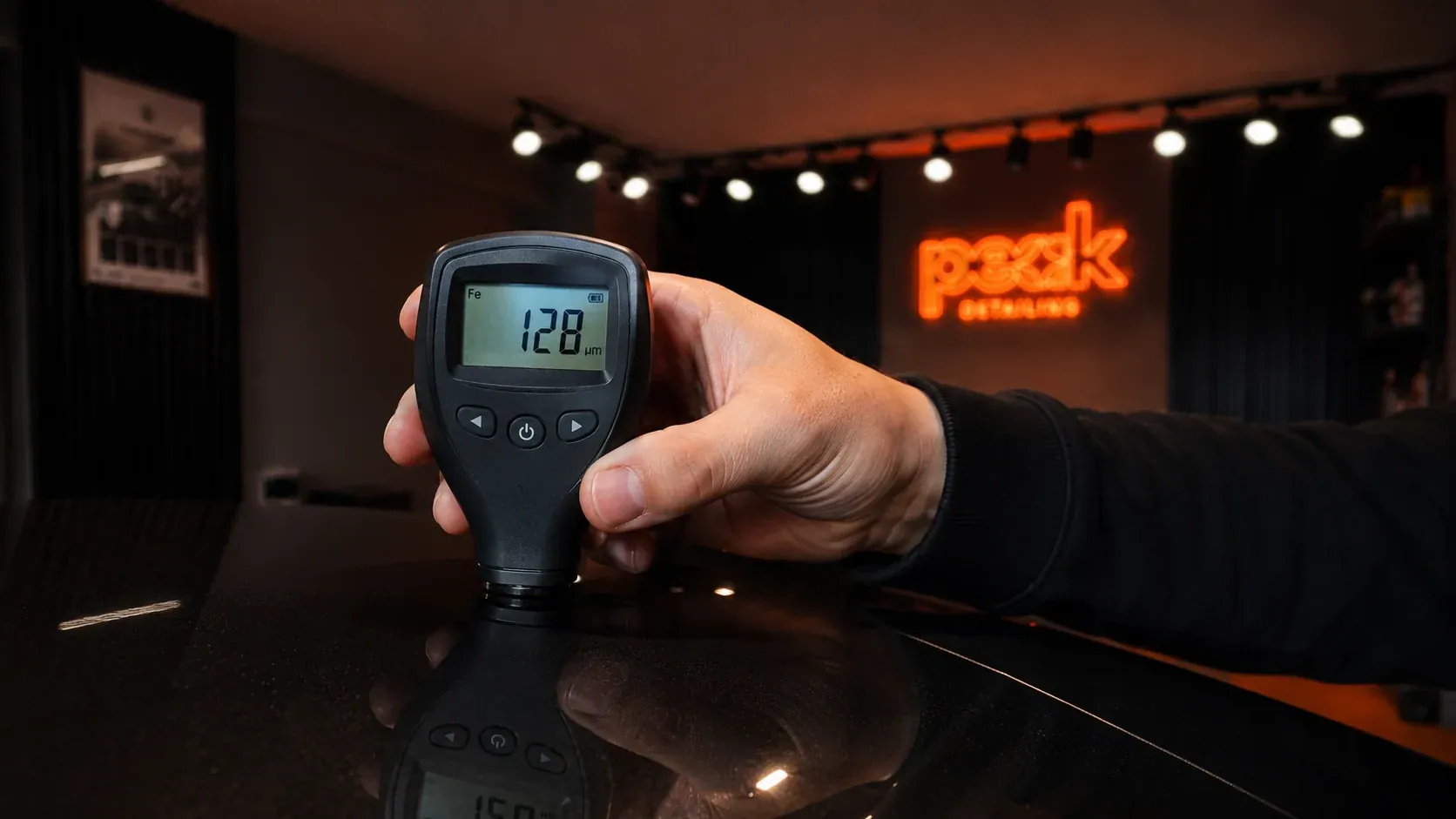
Paint thickness measurement gives insight into a panel's history and the risk of the process. However, most standard handheld gauges measure the total coating system on the metal panel; they may not, on their own, show the clear coat thickness with certainty. The measurement result should be interpreted together with visual analysis, the car's history and the test spot.3,4
Gauges working on the magnetic induction principle can be used on steel panels, and those working on the eddy-current principle on non-magnetic but conductive metal surfaces such as aluminum. These methods are defined under ISO 2178, ISO 2360 and ASTM D7091.1,2,3
On bumpers, mirror caps or certain composite parts, standard gauges may not be sufficient. DeFelsko separately defines an ultrasonic measurement option for non-metal surfaces such as plastic and fiberglass.4
- Taking a measurement from only a single point on each panel is not enough; variations across different areas should be assessed.
- Abnormal thickness differences can suggest the possibility of spot paint, filler, touch-ups or a previous repair.
- A measuring gauge alone is not a safety guarantee.
- The decision for aggressive correction or wet sanding should be made by assessing the measurement data and the panel's behavior together.
Paint thickness measurement does not, on its own, answer the question "can it be polished?"; but it is one of the indispensable pieces of data for making a safe decision.
What Is a Test Spot and Why Is It Done?
A test spot is a controlled trial started with the least aggressive combination on a small, representative area. The aim is to reach the targeted visual improvement without applying unnecessary abrasion.
- The pad, polish, machine type, speed and number of passes are evaluated.
- After the surface is cleared of oil and residue, it is inspected under suitable lighting.
- Different panels on the same car can behave differently.
- If necessary, the combination is strengthened in gradual steps.
- The final plan is determined according to the test spot result.
The best paint correction is not the one that starts with the most aggressive compound, but the one that achieves a safe result with the least unnecessary abrasion.
The Difference Between Single-Stage and Multi-Stage Paint Correction
Paint correction is not a one-size-fits-all package. The number of stages is determined by assessing the level of surface defects and the safe processing limits.
| Application | Goal | Who is it suitable for? | Limit |
|---|---|---|---|
| Single-stage | Increase gloss and reduce light defects | Cars with light marring that are well-kept or near-new | Does not fully resolve deep defects |
| Two-stage | Separate the cutting and finishing steps | Cars with mid-level defects | Clear coat margin and risk analysis are required |
| Multi-stage | Reduce heavy defects in a controlled way | Cars deemed to require it after surface analysis | Not necessary or safe for every car |
| Spot correction | Improvement on a specific panel or area | Cars with localized defects | Does not produce the same result across the whole car |
The Difference Between Rotary, Dual Action and Forced Rotation Machines
Machine choice alone is not an indicator of quality. The panel structure, defect level, pad, product and the operator's control should all be assessed together.
| Machine Type | General Character | Advantage | What to Watch Out For |
|---|---|---|---|
| Rotary | Single-axis rotary motion | Strong cutting capacity | Heat, edge and surface control are more critical12 |
| Dual Action / DA | Rotary and oscillating motion | Balanced, controlled operation | May not be sufficient on its own for every defect11 |
| Forced Rotation | Forced rotation and oscillation | A balance between cutting and control | Requires the right pad and product selection13 |
RUPES notes that rotary motion can generate more friction and heat on the surface and, if used incorrectly, can create the risk of burn-through, surface strike-through and rotary-induced marks.11,12
How Is Pad and Polish Selection Made?
Pad and polish selection cannot be solved with a single brand or product. As cutting power increases, the need for finishing can also increase. The same combination can produce different results on different paint systems.
For paint finishing processes, 3M positions compound, polish and ultrafine polish, along with foam and wool pads, separately for different stages. In its random orbital system technical document, it states that the surface should be cleaned, the pad kept flat, work done in small areas and the pads cleaned frequently.9,10
- Foam pad: Can be used in different firmness levels from finishing to medium cutting.
- Microfiber pad: Can provide effective cutting in the right system; finishing control may then be required.
- Wool pad: Can be considered when strong cutting is needed; if used incorrectly, it can create the need for additional finishing.
- Compound / cutting paste: The abrasive product group used for more prominent defects.
- Polish / finishing product: Used to increase the clarity and uniformity of the surface.
- One-step product: Can be considered for light defects and practical applications; not sufficient on every car.
How Does the Paint Correction Process Unfold?
Professional paint correction is not a single polishing step. It is a controlled process that assesses the surface safely, avoids removing unnecessary material and supports the final result with a protection plan.
- Initial inspection of the car's surface and a discussion of expectations.
- Safe pre-wash and contact wash.
- Iron fallout, road film and appropriate decontamination procedures.
- If needed, a clay treatment or mechanical decontamination.
- Drying and defect analysis under light.
- Paint thickness measurement and assessment of risky areas.
- Protecting plastic trim, sensitive edges and protruding parts.
- Verifying the machine, pad and polish combination with a test spot.
- If needed, the cutting stage.
- If needed, the finishing stage.
- Monitoring throughout the process of panel temperature, pad cleanliness and product amount.
- Checking the true result with a panel wipe.
- Final inspection under different light angles.
- Planning suitable protection from the ceramic coating, PPF, sealant or wax options.
- Pre-handover inspection and care guidance.
In 3M paint finishing SOP documents, the steps of refining sanding marks, compounding, machine polishing, ultrafine polishing and final inspection under light are kept separate. This approach shows that heavy defect removal and final clarity are not the same process.9
When Might Wet Sanding Be Needed?
Wet sanding is not a routine detailing step. It should be applied only on certain defects, after assessing the panel's history and the safe clear coat margin.
- It is not applied to every scratch.
- The risk is higher on edges, curves and protruding areas.
- Measurement and the assessment of an experienced operator are required.
- Compounding and finishing steps may be needed after sanding.
- If the clear coat margin is limited or the panel's history is uncertain, the process may not be recommended.
In wet sanding, the right goal is not "to eliminate the scratch at all costs," but to achieve meaningful improvement within safe limits.
Is Paint Correction Necessary Before PPF?
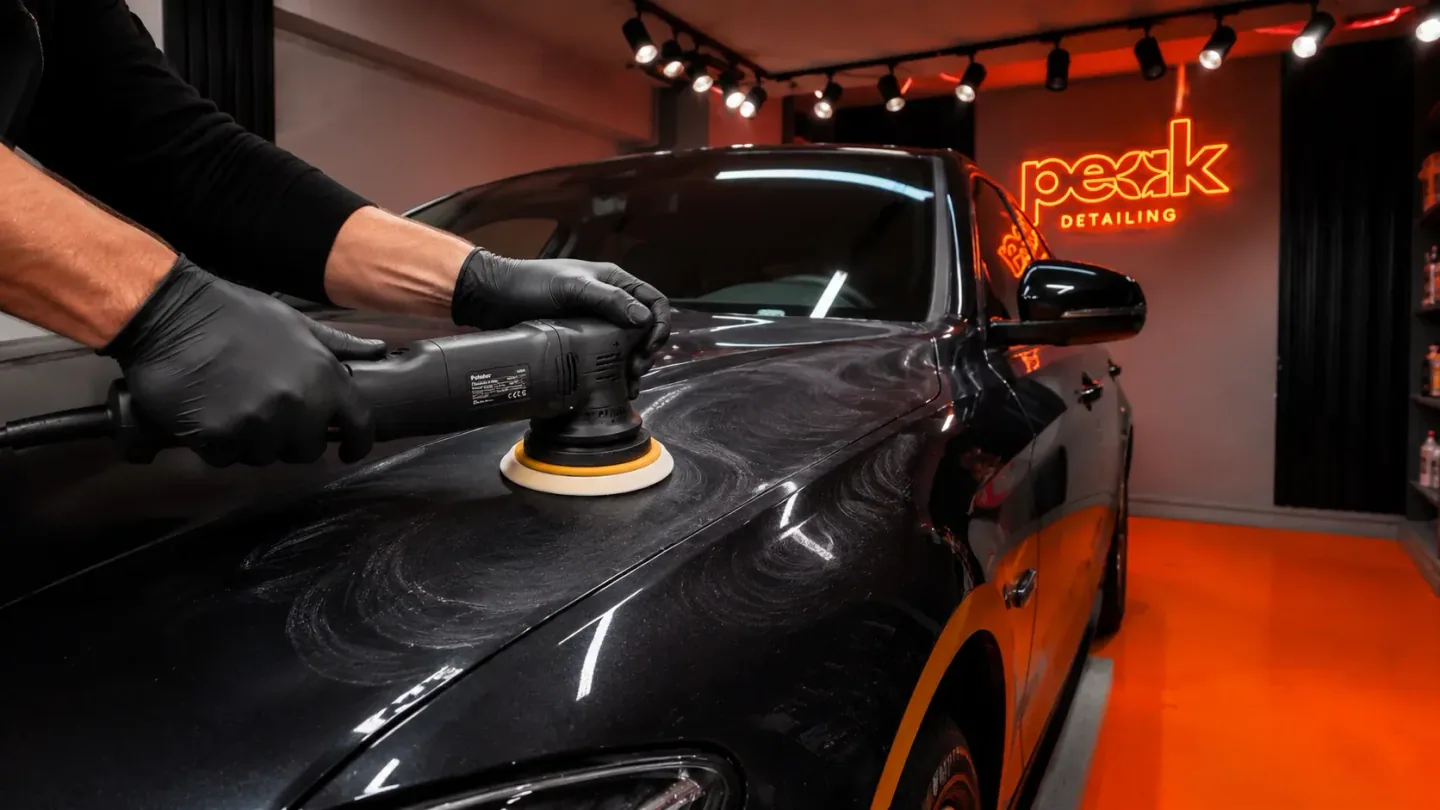
A surface inspection is required before PPF; however, heavy polishing is not mandatory on every car. Because the film is clear, prominent marring, holograms, dullness or water spots can remain visible after the application as well.
The XPEL ULTIMATE PLUS technical data sheet defines the PPF product as a clear polyurethane film designed against the damaging effects of stone chips and abrasion. This physical barrier does not automatically eliminate existing paint defects.14
- For light micro scratches, suitable surface preparation alone may be sufficient.
- For prominent defects, as much paint correction as needed can be carried out.
- Panels with spot paint, touch-ups or insufficiently cured work should be assessed separately.
- The goal is not aggressive polishing for the sake of perfection, but a balanced appearance and safe preparation under the film.
Before PPF, the right question is not "Must polishing be done?" but "Is the surface, as it is, acceptable and safe under the film?"
Is Paint Correction Necessary Before Ceramic Coating?
Ceramic coating does not hide surface defects. Because it increases gloss and surface clarity, some marring and holograms can become more visible. However, heavy paint correction is not mandatory on every car.
The XPEL FUSION PLUS PAINT & PPF technical data sheet defines ceramic coating as a hydrophobic coating developed for use on paint and PPF surfaces. The coating's success in appearance should be assessed together with the preparation of the surface it will be applied to.15
- Even on a new car, there can be marks caused by transport or improper washing.
- On a lightly defective surface, single-stage finishing may be sufficient.
- On a heavily defective car, a more comprehensive correction may be needed.
- If the clear coat margin is limited, safe improvement should be chosen over the goal of removing the defect entirely.
Protection Options After Paint Correction
Paint correction improves appearance; however, it does not, on its own, protect the surface against subsequent usage conditions. The protection choice should be determined according to the usage profile.
| Protection Option | Main Benefit | Physical Impact Protection | Maintenance Need |
|---|---|---|---|
| Wax / quick detailer | Short-term appearance and water repellency | Should not be expected | Requires regular reapplication |
| Sealant | Surface maintenance support | Should not be expected | Varies by product |
| Ceramic coating | Hydrophobicity, ease of maintenance, appearance support | Does not provide protection against stone chips | Requires regular maintenance15 |
| PPF | Physical barrier against stone chip and abrasion risks | Stronger | Requires regular maintenance14 |
What Determines the Price of Paint Correction?
The price of paint correction is not determined by car size alone. The surface's current condition and the targeted level of improvement directly affect the scope of work.
| Factor | Notes |
|---|---|
| Car size and number of panels | Difference in workmanship between a small sedan and a large SUV |
| Defect density and depth | Light marring and heavy swirl marks may require different stages |
| Car color and finish sensitivity | Dark colors and soft paints require more careful work |
| Spot paint / touch-up history | Requires separate assessment and a more cautious approach |
| Number of stages | The need for single-, two- or multi-stage work |
| Need for localized wet sanding | Requires additional time and care |
| Final protection option | Ceramic coating, PPF, sealant or wax |
For a precise price, the car's surface condition, defect level, panel history and targeted level of improvement should be assessed together. Prices given without seeing the car may not reflect reality.
Which Cars Does Paint Correction Make Sense For?
Paint correction clearly demonstrates its value in the following profiles:
On cars with clear coat burn-through, cracking, paint chipping, rust, deep scratches or poor spot paint, expectations should be reassessed. Paint correction does not solve every problem.
Why Does Paint Correction Matter in İstanbul Conditions?
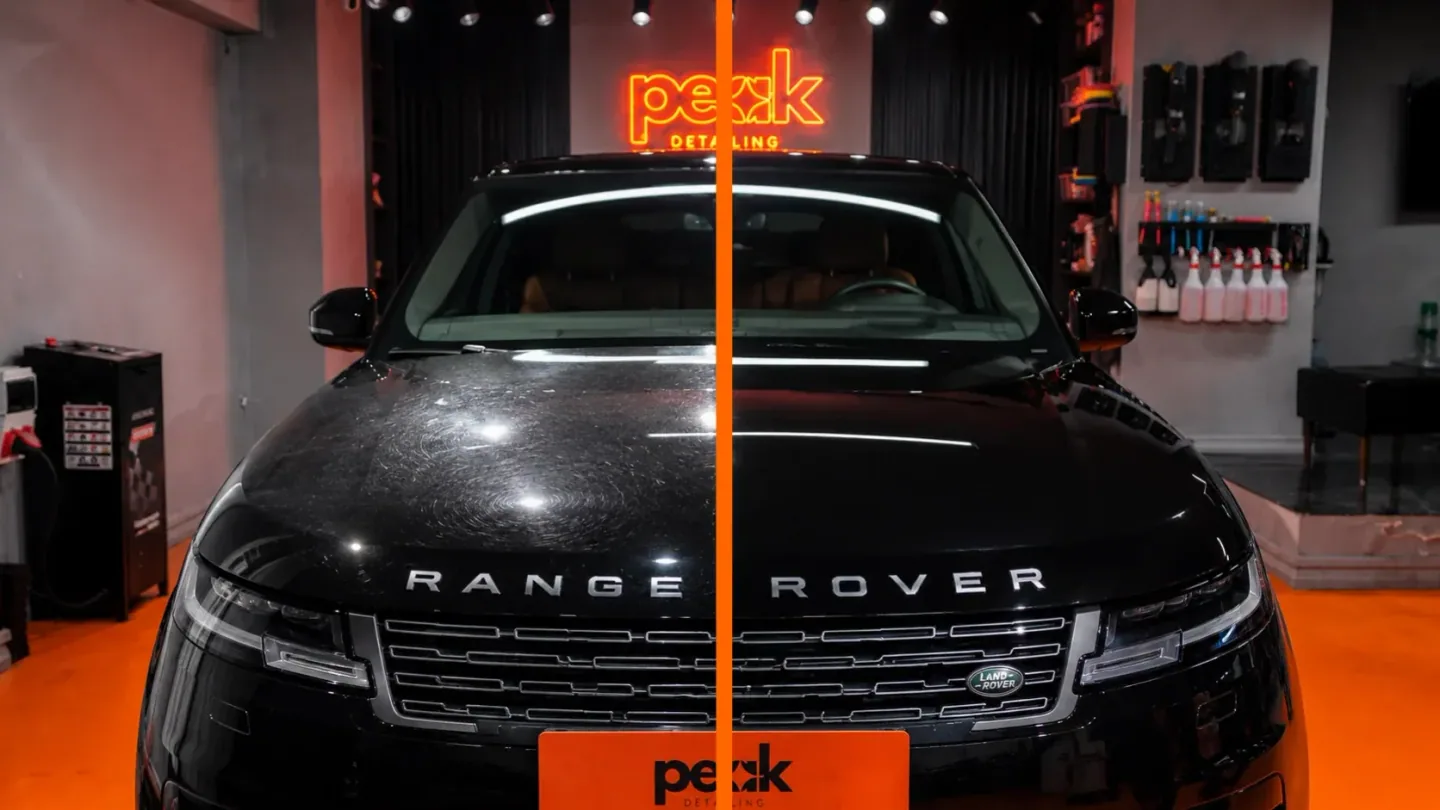
In İstanbul use, what wears the paint surface is most often not a single major damage, but small effects that accumulate over time and poor maintenance habits. MGM official climate statistics show temperature and precipitation conditions that change throughout the year for İstanbul.16
- Build-up of road film, brake dust and particles in heavy city traffic
- Exposure to bird droppings, sap and insect residue in open parking lots
- Mud and outdoor residue carried onto the surface during rainy periods
- Water droplets drying on a hot panel during the summer months
- Uncontrolled wiping or brush washing at malls and quick-wash points
- Swirl marks, marring and water spots becoming more visible on dark-colored cars
On cars used within the city in İstanbul, small effects such as improper washing, hard water, road film, bird droppings and sap can noticeably weaken the surface's appearance over time. Paint correction does not erase this history entirely; but it can meaningfully tidy up the surface within safe limits.
How Can You Tell a Good Paint Correction Application?
- Using surface analysis and proper lighting before the work
- Measuring paint thickness when needed and taking data from different areas
- Assessing the risk of spot paint, touch-ups and previous work
- Doing a test spot and selecting the least aggressive effective method
- Adjusting the pad and polish combination according to the panel's condition
- Monitoring panel temperature, pad cleanliness and product amount
- Working more carefully on edges, curves and sensitive trim areas
- Carrying out a final inspection under different light angles after degreasing
- Not applying risky work for the sake of removing every last defect
- Offering the customer a realistic result, a protection plan and a care plan
In paint correction, quality should be measured not by how aggressively the defect is removed, but by how safely, evenly and sustainably the targeted appearance is achieved.
Aftercare Following Paint Correction
- Avoid automatic brush washes.
- Use a clean wash mitt, a suitable shampoo and clean microfiber equipment.
- Do not dry-wipe with a dirty cloth.
- After washing, do not let water dry on its own on the panel.
- Address bird droppings, sap and insect residue as early as possible.
- Do not apply random abrasive products to the surface.
- Follow the care instructions of the chosen protection product.
- Schedule a professional maintenance wash and surface inspection when needed.
Frequently Asked Questions
What is paint correction?
Are paint correction and compounding/polishing the same process?
Does paint correction remove every scratch?
Can a deep scratch be removed by polishing?
Why is paint thickness measured?
Does paint thickness measurement only show the clear coat?
Does polishing remove material from the clear coat?
Is single-stage paint correction enough?
Is paint correction mandatory before PPF?
Is paint correction mandatory before ceramic coating?
Is paint correction more important on black cars?
Is paint correction done on a brand-new car?
How often should paint correction be done?
Sources
The sources below consist of automotive paint systems, coating thickness measurement, polishing processes, surface defects and manufacturer technical documents. Product selection and the application decision should be assessed on a per-car basis.
- ISO 2178:2016 — Non-magnetic coatings on magnetic substrates — Magnetic method. iso.org
- ISO 2360:2017 — Non-conductive coatings on non-magnetic electrically conductive base metals — Eddy-current method. iso.org
- ASTM D7091-22 — Nondestructive Measurement of Dry Film Thickness. astm.org
- DeFelsko. How to Use Paint Thickness Gauges for Better Automotive Detailing. defelsko.com
- Akafuah, N. K. et al. (2016). Evolution of the Automotive Body Coating Process — A Review. Coatings, 6(2), 24. doi.org
- Seubert, C. et al. (2012). An Overview of the Scratch Resistance of Automotive Coatings. Coatings, 2(4), 221–234. doi.org
- Yari, H. et al. (2011). A mechanistic study of degradation of a typical automotive clearcoat caused by bird droppings. Journal of Coatings Technology and Research, 8(1), 83–95. doi.org
- Ramezanzadeh, B. et al. (2010). The Effect of Natural Tree Gum on the Degradation of a Typical Automotive Clear Coat. Journal of Polymers and the Environment, 18, 545–557. doi.org
- 3M Automotive. Paint Finish Full Panel Process — Standard Operating Procedures. 3m.com
- 3M Automotive. 3M Perfect-It Random Orbital Polishing System — Technical Data Sheet. 3m.com
- RUPES. Random orbital polisher — BigFoot LHR21ES. rupes.com
- RUPES. Rotary polisher — BigFoot LH19E. rupes.com
- RUPES. Gear driven dual action polisher — BigFoot Mille LK900E. rupes.com
- XPEL. ULTIMATE PLUS — Technical Data Sheet. xpel.com
- XPEL. FUSION PLUS PAINT & PPF — Technical Data Sheet. xpel.com
- Meteoroloji Genel Müdürlüğü. Resmî İklim İstatistikleri — İstanbul. mgm.gov.tr