What Is PPF? A Short Definition and History
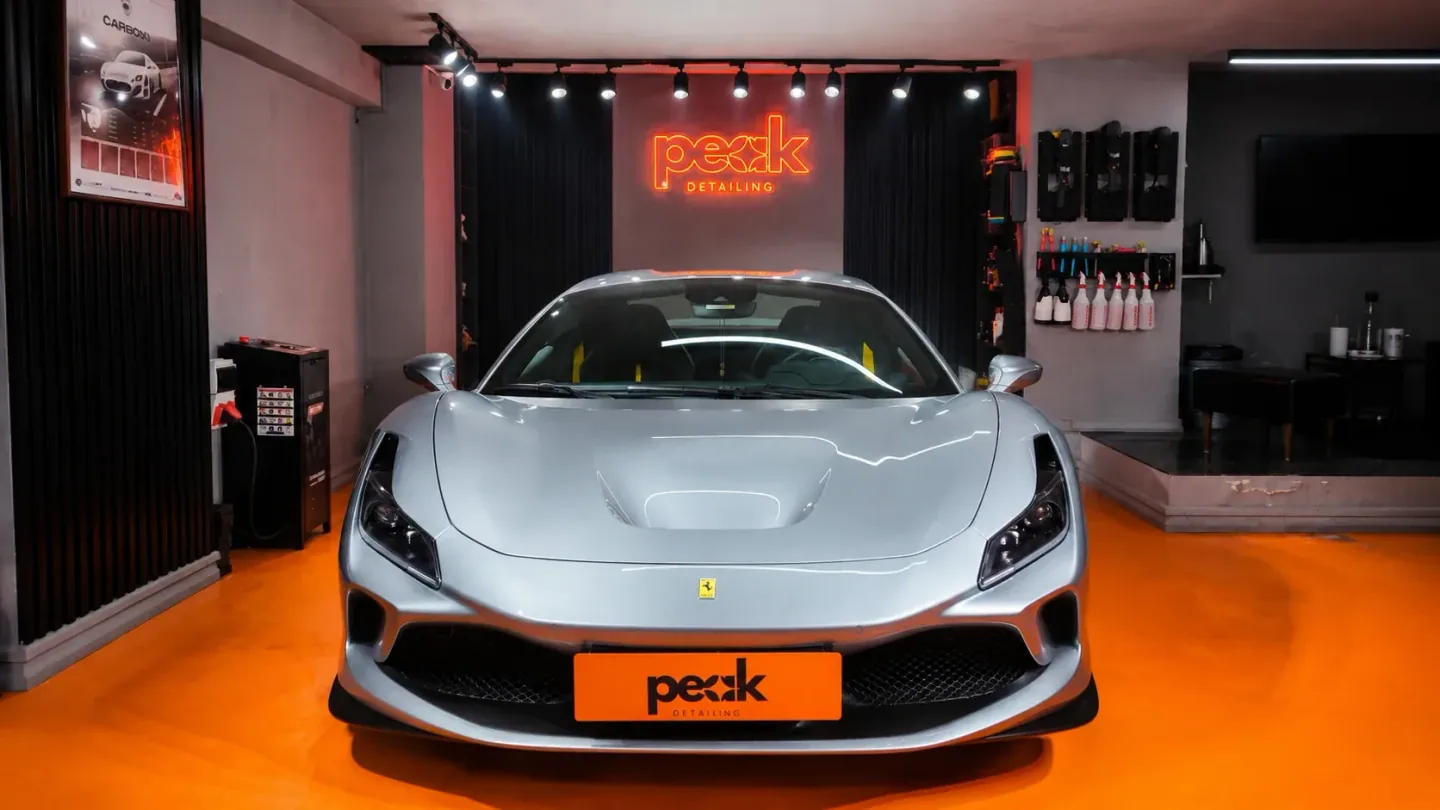
PPF stands for Paint Protection Film. It is also referred to as a clear bra, clear protective wrap or car protection film. The technology traces its origins to aerospace and military surface-protection applications; its modern automotive use is essentially that clear, replaceable protective layer adapted to car paint.
The principle is simple: a clear protective layer — virtually invisible from the outside — is applied over the car's painted surface. The job of this layer is not to make the paint look prettier, but to separate the paint from external hazards.
Who is this guide for?
- Anyone buying a new car who wants to protect the paint
- Drivers exposed to stone-chip risk in İstanbul city and highway use
- Those who want to clarify the difference between PPF and ceramic coating
- Anyone deciding between full-car PPF and front-end PPF
- Those who want to understand which factors affect the price of PPF
While ceramic coating gives the surface chemical resistance, gloss and a hydrophobic effect, PPF — being a physical film layer — forms a much stronger barrier in areas exposed to stone chips, road grit, light rubbing and scratching. For this reason, the two technologies are usually not alternatives to one another, but two distinct, complementary approaches to protection.
This treatment does not make a car "completely scratch-proof." In cases of heavy impact, sharp objects, dents or accidents, the film can also be damaged. Assessed with the right expectations, PPF is a physical barrier that helps keep the original paint in better condition — especially in front-end and full-car applications. If you're wondering "does PPF damage the paint or pull it off when removed?", our is PPF harmful? guide answers this in detail.
Which Risks Does PPF Protect Your Paint Against?
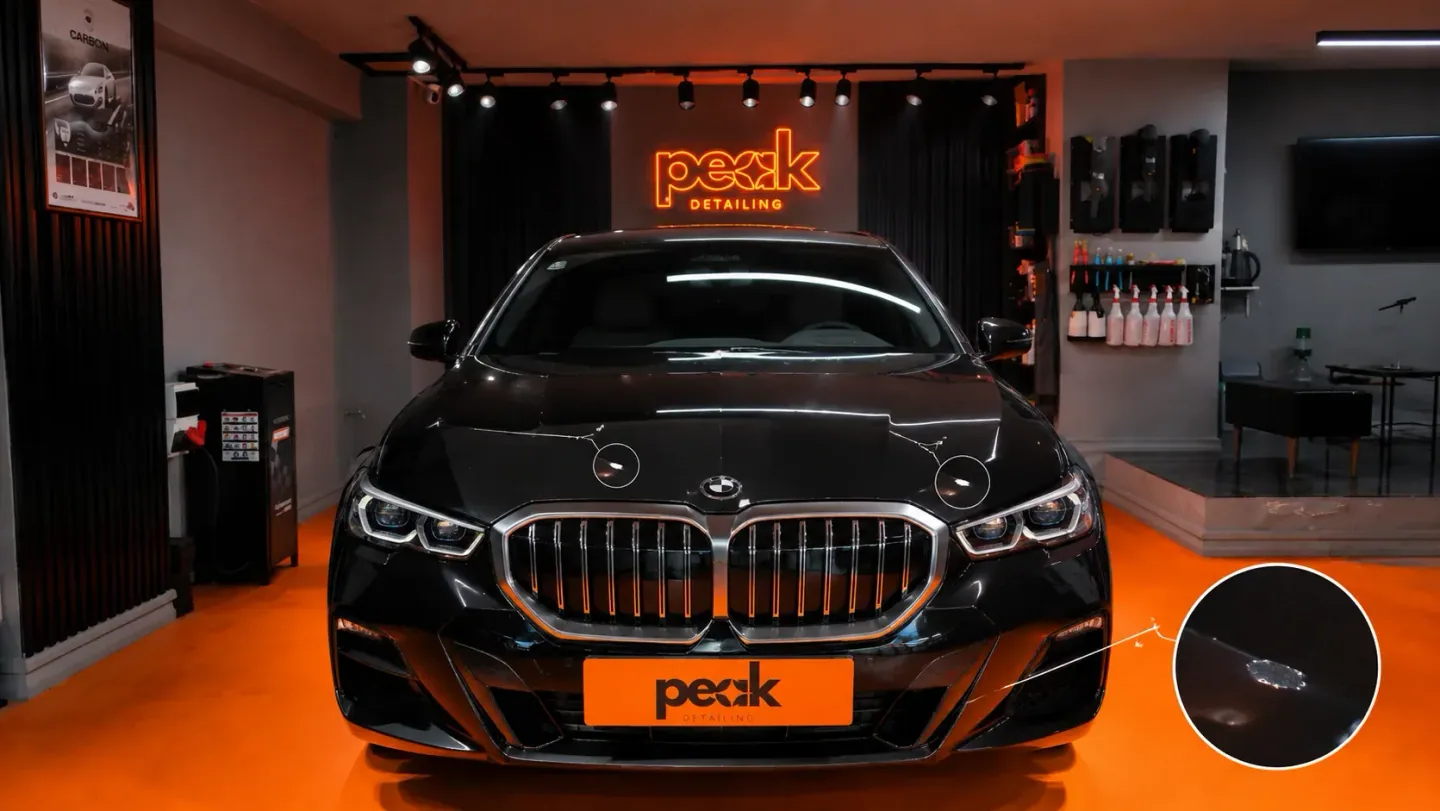
Out in the open, a car's paint is constantly exposed to impact, abrasion, chemicals and UV. In İstanbul traffic that risk is even higher: bumper contact in dense traffic, scuffs from motorcycles, aggregate flung up from roadworks, stones thrown off the back of trucks, door dings in shopping-mall car parks, and sap and insect residue in coastal and wooded areas are all common.
With PPF in place, the paint is no longer the first surface to make contact in these situations; the film takes the impact or the contaminant first. In the product literature of manufacturers such as XPEL, 3M and HEXIS, PPF is described as being used to provide physical protection against stone chips, scratches, abrasion, UV and environmental effects. The film's elastic TPU structure helps disperse the kinetic energy it carries, reducing a significant portion of the effect that would otherwise reach the paint surface.
The outermost layer of a car's paint — the clear coat — is a thin layer with limited margin for correction within the overall paint system; industry sources note that OEM clear coat thickness is often in the range of roughly 35–50 microns. When this layer is worn through or cracked, the color layer beneath is exposed directly to UV, moisture and chemicals. PPF helps slow down precisely this process.
| Risk | PPF effect | Most sensible area |
|---|---|---|
| Stone chips | The film takes the physical impact; kinetic energy is dispersed | Front bumper, hood, fender, headlights |
| Road grit | Reduces direct micro-impacts to the paint | Front end, rocker panels |
| Door-handle scratches | Reduces fingernail and key marks | Door-handle cups |
| Trunk-loading marks | Keeps luggage/scuff contact on the film | Upper rear bumper, trunk sill |
| Bird droppings / insect acids | Prevents direct chemical contact with the clear coat | Hood, roof, mirror caps |
| Tree sap | Stays on the surface and cleans off easily | All horizontal surfaces, depending on parking |
| UV and fading | Reduces direct UV exposure | All exterior surfaces |
PPF's biggest advantage is that when damage does occur, in most cases it's the film that gets damaged, not the paint. So when the film is replaced later on, the original paint underneath has stayed in better condition — one of the strongest ways to protect a car's resale value.
What Layers Make Up PPF?
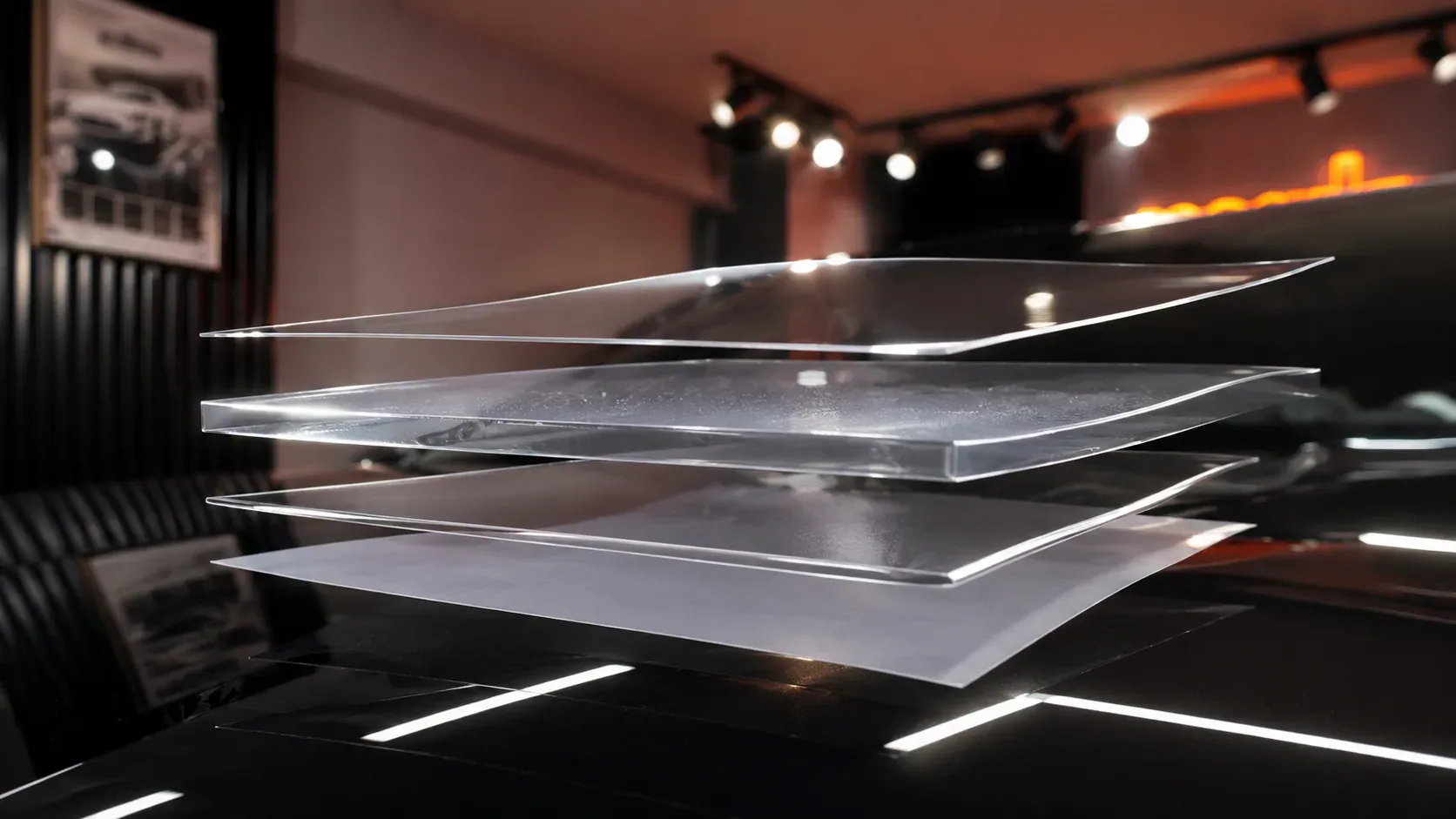
PPF film is not a single layer but is made up of four distinct layers. Each layer has a different job:
The outermost surface of the film. Hydrophobicity, stain resistance, gloss and surface-level self-healing performance largely come from this layer.
The actual physical protection layer. With its flexible, clear structure, it acts as a buffer against stone chips, road grit and light rubbing.
The pressure-sensitive adhesive layer that bonds the film to the paint surface. Removal behavior and warranty coverage vary by product line.
The protective paper peeled off before application. It is discarded once installation is complete.
Total thickness in most automotive PPF products is typically in the region of 150–200 µm. The right choice, however, should not be based on thickness alone; it should also consider topcoat quality, optical clarity, adhesive structure, warranty coverage and the installer's standards.
PPF film types — the difference between TPU, TPH and PVC
| Type | Description | Performance | Use |
|---|---|---|---|
| TPU | Thermoplastic Polyurethane — premium standard | Self-healing, high UV resistance, flexible | Professional car protection |
| TPH | Thermoplastic Hybrid — between TPU and PVC | Mid-level performance, lower cost | Economy / mid segment |
| PVC | Polyvinyl Chloride — economy segment | Stiff, less clear, risk of yellowing under UV | Low-budget, short-term use |
When getting a quote, asking only "Is it TPU?" is not enough. The film's brand, product line, topcoat, thickness, care instructions and warranty coverage should all be assessed. Brands such as XPEL, SunTek, STEK, 3M, LLumar and HEXIS should be reviewed separately against the manufacturer's documentation in terms of advanced topcoat, self-healing, hydrophobicity, stain resistance and warranty terms.
Which Areas Is PPF Applied To?
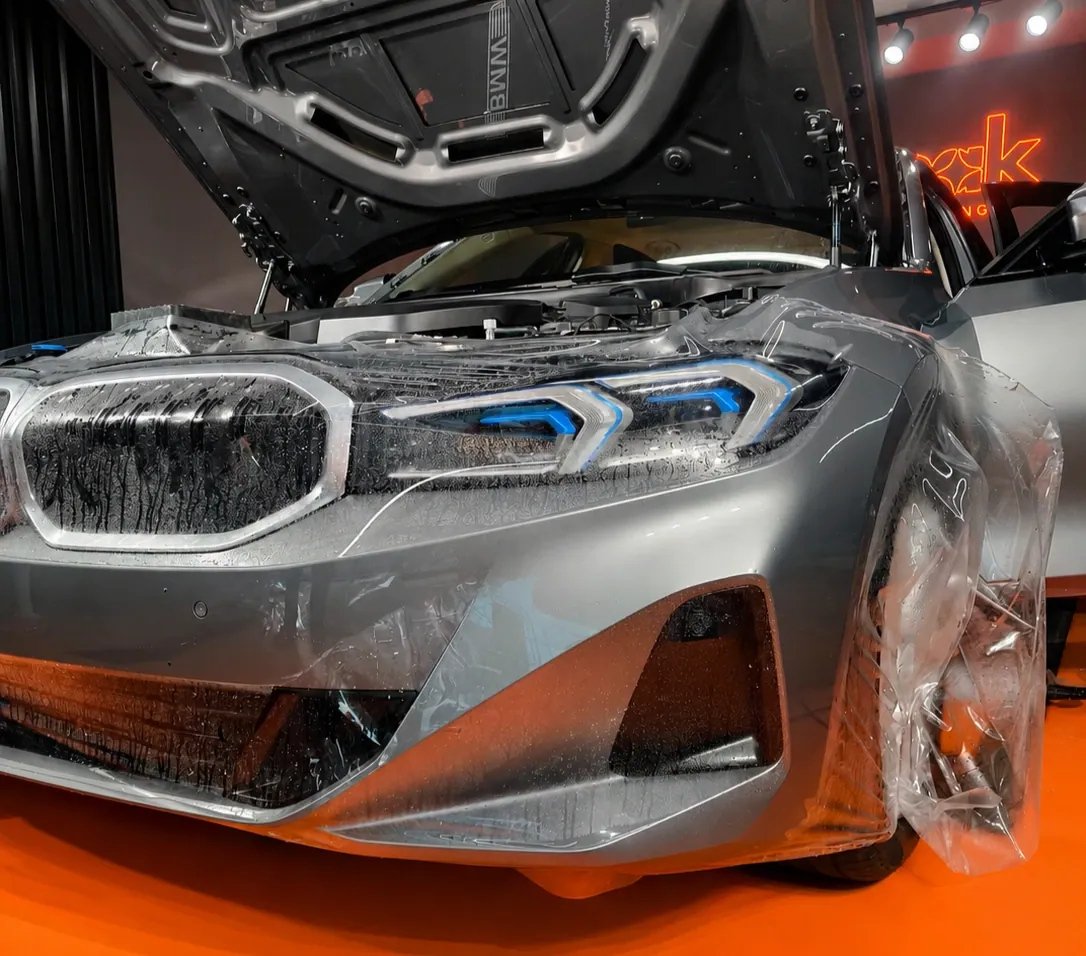
PPF is planned around two main approaches: zone protection and full-car protection. Zone protection targets the areas that take the most damage, while full-car protection wraps all of the car's painted exterior surfaces in film, offering the broadest coverage.
Front-end package — the most common choice
This is the most popular protection combination. Its typical coverage is: front bumper (full), full hood, front fenders (partial or full), the area around the headlights and fog lights, mirror caps and the lower section of the A-pillar. This package helps reduce the risk of stone chips from highway driving, city stone strikes and everyday chipping. For most owners it's one of the strongest options for balancing investment and protection.
Full-car PPF
This wraps all of the car's painted exterior surfaces in film. It particularly makes sense in the following cases: new and premium-segment cars, dark colors (especially black and navy), a long-term ownership plan (5+ years), predominantly highway driving and collector cars. With correct application and correct removal, full-car PPF can help keep the original paint in better condition.
To find out which package suits your car profile, take a look at our PPF service page and our application examples. Drivers in and around Maslak can find area-specific process and package details on our PPF in Maslak page.
Does Self-Healing Really Work?
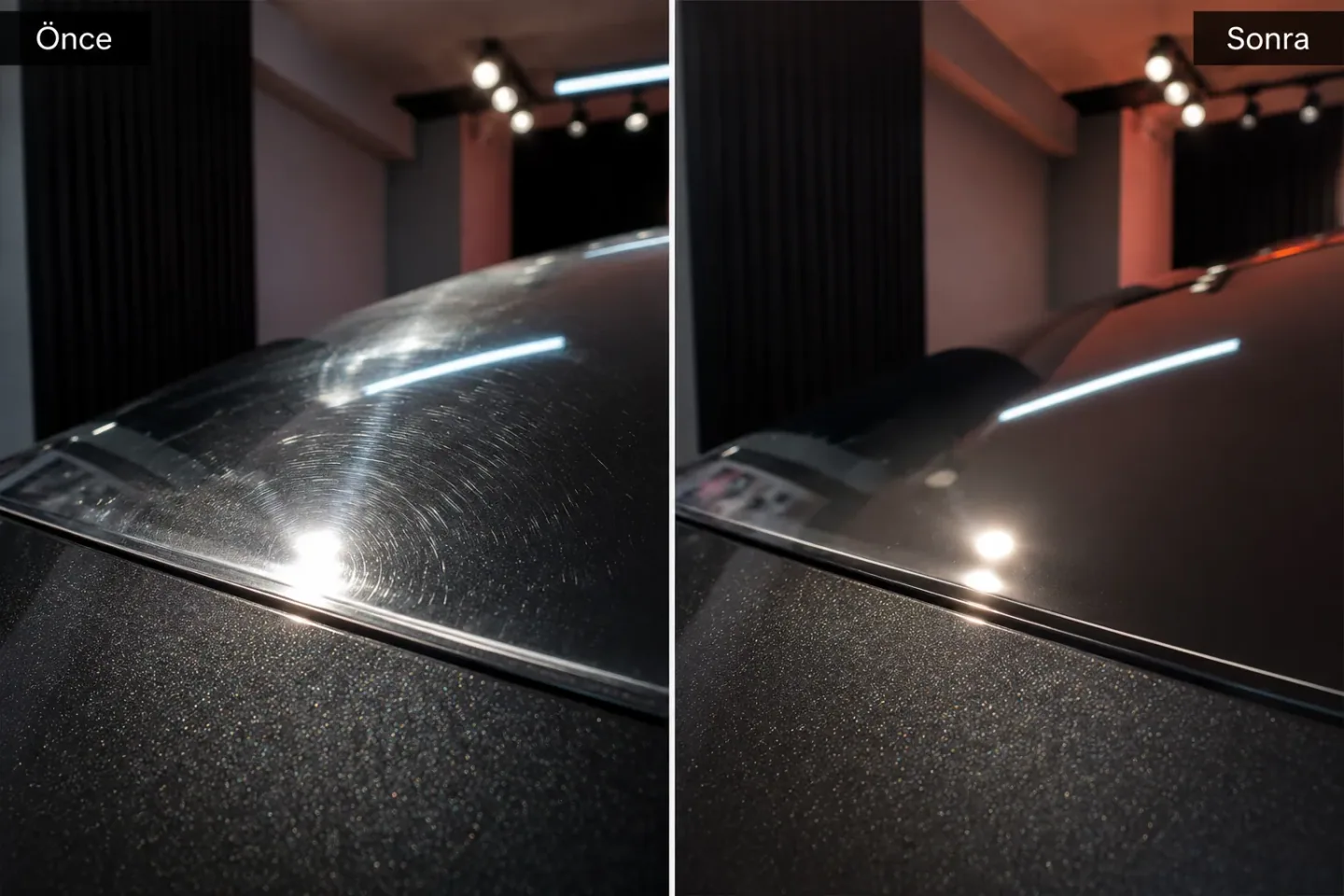
Self-healing is one of the most asked-about features of premium PPF films. It is a genuine benefit — but it only applies to superficial micro-scratches.
How does it work?
Self-healing works through the elastic polymer structure in the upper topcoat layer reducing superficial deformation with heat. Manufacturer documentation from the likes of XPEL, SunTek, STEK, 3M and LLumar generally notes that this feature applies to superficial/minor scratches. The scientific basis for this effect is explained in the literature through reversible bond interactions and self-healing polymer behavior.
The limits of self-healing
When a customer complains about a "wash mark," if it's a superficial topcoat scratch it disappears visibly within minutes when the panel is rubbed with hot water. If it doesn't disappear, the scratch has gone from the topcoat down into the TPU layer and is damage that self-healing cannot resolve.
What to Look For When Choosing a PPF Brand
In the PPF world, brands such as XPEL, SunTek, STEK, 3M, LLumar and Hexis are frequently compared. But the right choice is not made on brand name alone; the product line, topcoat structure, warranty coverage and installer standard should all be assessed together.
| Brand | Example line | Document to check | Warranty note |
|---|---|---|---|
| XPEL | Ultimate Plus family | Technical data sheet + warranty document | Verify by product line and country |
| SunTek | Reaction / Ultra lines | TDS + product warranty terms | Check against distributor documentation |
| STEK | DynoShield lines | Topcoat, yellowing and care documentation | May vary by country/line |
| 3M | Scotchgard PPF family | Product-line technical documentation | Read warranty coverage clause by clause |
| LLumar | PPF product families | TDS + care/warranty documentation | May vary by line |
| Hexis | BODYFENCE family | Technical data + warranty coverage | Check regional warranty terms |
What should you look at in a comparison?
Topcoat chemistry: Two films of the same thickness can perform differently because of the topcoat. Hydrophobicity, stain resistance, self-healing speed and gloss are all strongly influenced by this layer.
Warranty coverage: Claims like "10-year warranty" are not enough on their own. Yellowing, blistering, adhesive separation, cracking, care requirements and any requirement to use a certified installer should all be checked in the warranty document.
Climate suitability: Because of intense sun, open-air parking and city pollution in Turkey, UV stabilization, stain resistance and topcoat durability must be assessed.
What Determines the Price of PPF?
The price of PPF depends not only on the film brand used, but also on the car's size, the area being protected, panel shape, surface preparation and the application detail. For accurate pricing, the car, how it is used and your expectations should all be assessed together. For current price ranges and sample package figures, see our 2026 PPF pricing guide.
- Scope of application: Front-end, full-car or optional zone-based PPF directly changes the price.
- Film brand and line: Different lines from the same brand can differ in topcoat, thickness, clarity and warranty.
- Car size and panel structure: Large SUVs, coupes or cars with many panels can take longer to work on.
- Edge wraps and the need to remove/refit parts: A cleaner finish requires extra time and detail work on some parts.
- Surface preparation: Iron-fallout removal, clay treatment, IPA cleaning, or paint correction if needed, all affect the overall process.
- Localized paint/touch-up risk: On panels with localized repaint, measurement and pre-assessment must be done more carefully.
- Warranty and installer standard: Post-handover inspection and a warranty document are quality elements that affect the price.
PPF or Ceramic Coating?
PPF and ceramic coating are often compared, but they don't do the same job. PPF is a physical protective film applied to the paint surface. Ceramic coating, on the other hand, is a thin protective coating layer applied to surfaces such as paint, PPF or glass, providing water repellency, gloss and chemical resistance.
| Criterion | PPF | Ceramic Coating |
|---|---|---|
| Structure | Physical TPU film (150–200 µm) | Chemical nano-protection (1–3 µm) |
| Primary protection | Physical impact, stone chips, scratches | Chemical, hydrophobicity, UV |
| Self-healing | Yes (premium TPU) | No |
| Hydrophobic effect | Limited (depends on topcoat) | High (water beading) |
| Lifespan | 7–10 years (quality film) | 2–5 years (quality coating) |
| Removal | Requires professional removal | Not really removed in practice; it wears away |
| Application time | 2–4 days (depending on package) | 1–2 days |
PPF or ceramic coating?
PPF and ceramic coating serve different needs: PPF forms a physical barrier against stone chips and light rubbing, while ceramic coating makes surface care easier and increases water repellency. We determine which one suits your car during a free inspection, based on how you use it.
To assess the ceramic coating side separately, take a look at our ceramic coating service page.
Which Cars Is PPF Worth It For?
PPF may not be the right investment for every car. Three main factors should be assessed when deciding: the car's value, how it is used and how long you'll own it.
When PPF makes sense
For whom might PPF be unnecessary?
PPF is not a mandatory treatment for every owner. In the following cases, expectations and budget should be clarified first, and more economical protection alternatives considered if needed: owners who will use the car only briefly and then sell it; cars with heavy stone chipping, deep scratches or clear-coat problems; owners whose main expectation is gloss and washing ease rather than physical protection; and owners on a limited budget who only do low-risk city driving.
On cars with paint in poor condition, PPF does not hide paint defects; deep scratches, stone chips, dullness or clear-coat problems can in some cases look more pronounced under the film. The paint surface should therefore be inspected before application and, if needed, paint correction should be carried out.
Why Does PPF Matter in İstanbul?
PPF manufacturers test their products under standard laboratory conditions. Real-world performance, however, varies by where the car is driven. İstanbul has four main effects on PPF:
1. UV intensity
MGM (Turkish State Meteorological Service) climate data show that prolonged sun and heat exposure is significant in İstanbul, especially during the summer months. When choosing PPF, UV stabilization, yellowing resistance and topcoat durability are critical criteria. With low-quality films, the risk of yellowing and dulling can appear sooner.
2. Temperature fluctuation
In İstanbul, car surfaces experience both cold weather and high panel temperatures in summer over the course of a year. This fluctuation should be taken into account in terms of the flexibility expected from quality TPU films and their heat-activated self-healing performance.
3. Salty sea air
Cars parked in coastal areas (Sarıyer, Kadıköy, Bakırköy) are exposed to salty moisture. Salty moisture increases the risk of corrosion on stone chips, scratches or exposed metal areas. PPF helps protect the paint surface by separating it from direct contact with these external factors.
4. Air pollution and industrial fallout
Particulate matter, brake dust and industrial residue from İstanbul traffic create "fallout" on the paint surface. PPF separates the clear coat from direct contact with these residues; iron particles and similar contaminants build up on the film surface rather than the paint and can be cleaned off with regular washing.
In İstanbul city traffic with occasional highway use, we see that cars without PPF can develop stone chips and micro-impact marks on the front bumper and front of the hood in a short time. On cars with PPF, a significant portion of these impacts is taken by the film surface rather than the paint; but PPF is not an invisible suit of armour that solves everything — it's a physical buffer that delivers value with the right package.
How to Tell a Good PPF Installation
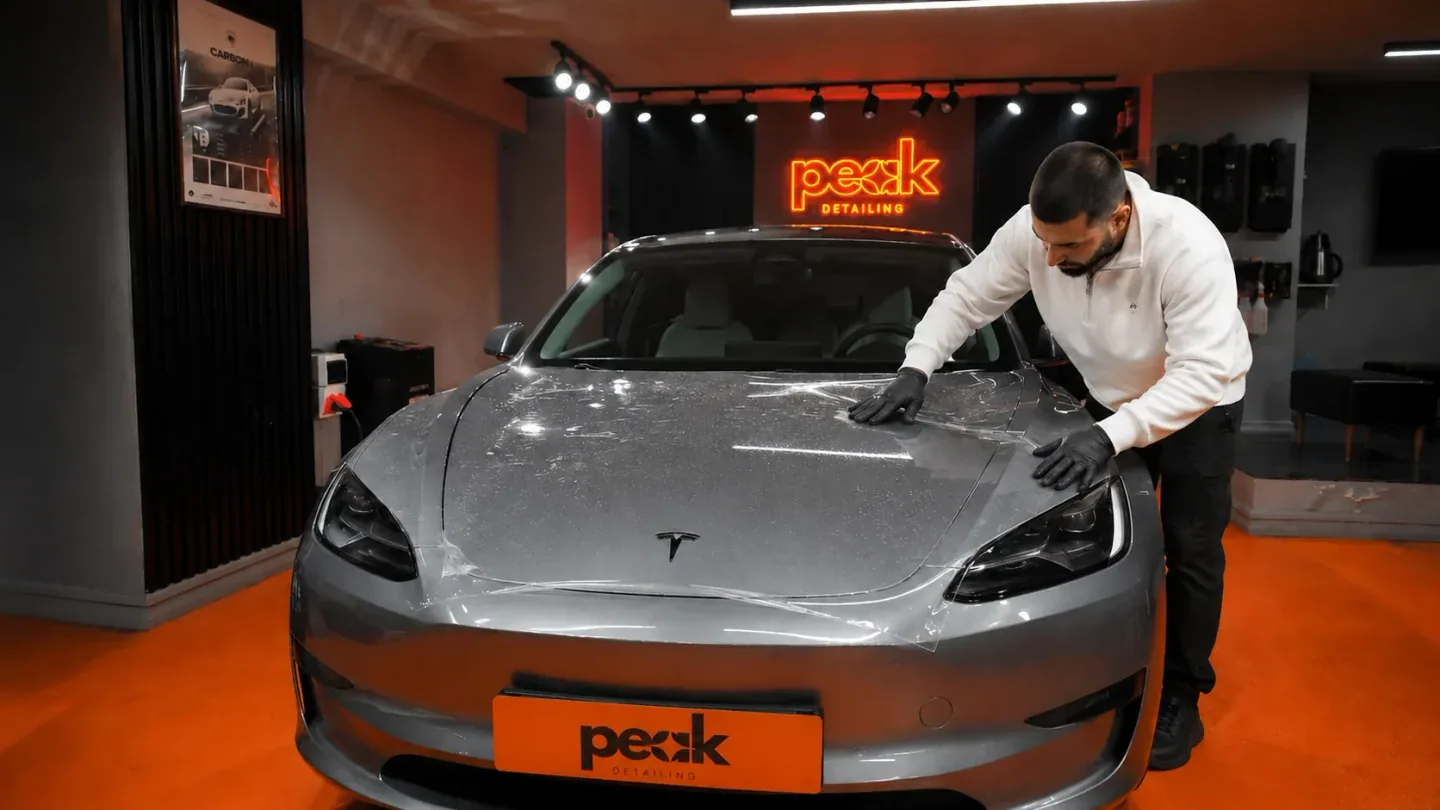
Quality in PPF isn't measured by "which brand of film was used?" alone. Film quality matters, but if the installation is flawed even the best film looks bad. Correct surface preparation, correct cutting, the right solution, a clean environment and patient edge finishing determine the quality of the installation.
For the order these steps follow in the studio and how many days each scope takes, see our step-by-step guide How is PPF installed?.
- Paint thickness measurement: Taking measurements at various points before application is critical for understanding the risk of localized repaint and touch-ups.
- Surface preparation: Washing, decontamination (iron-fallout removal, clay bar) and an IPA wipe-down to remove oil and silicone.
- Dust-free application environment: A positive-pressure, filtered application booth. Even a single hair trapped under the film stays visible for years.
- Slip + tack solution: The quality of the slip solution used to position the film and the tack solution that secures adhesion afterwards both matter.
- Patient edge finishing: The aesthetic quality of clean edges that are folded back or wrapped also affects the film's long-term adhesion.
- Post-handover inspection: A panel-by-panel check in the first week, with clear guidance on air bubbles, lifting and the warranty process.
In PPF applications, customer satisfaction and handover quality are our priority. Once the installation is complete, film alignment, edge finishing, surface cleanliness and overall appearance are inspected in detail. Our checking process continues until we achieve a clean, neat and reassuring result that meets expectations.
PPF Aftercare
In the first few days after PPF is applied, the moisture and application solution between the film and the surface are expected to work their way out. Because the time before the first wash, the maintenance interval and treatments that could void the warranty can all vary by brand/line, the care instructions provided after installation should be your reference.
The first 7 days
Avoid washing. Don't even use a dry cloth. Rain is no problem; but avoid pressure washing, automatic washes and aggressive chemicals.
Regular washing (the period after)
The two-bucket method, a grit guard, pH-neutral shampoo and a 300–400 GSM microfiber towel. Automatic tunnel washing is one of PPF's biggest enemies.
Things to watch out for
- Bird droppings and insect acids: Clean them off as soon as you notice them (within 1 hour if possible).
- High-pressure water: Don't aim pressurized water at the edges of the PPF from very close range or at a sharp angle; this increases the risk of edge lifting.
- Polishing: Aggressive compounds/polishes or products incompatible with the topcoat should not be applied over PPF. Use care products approved for the film surface.
Frequently Asked Questions
Does PPF make a car completely scratch-proof?
Is PPF only applied to new cars?
Does PPF film turn yellow?
Is the self-healing feature real, and how does it work?
Can ceramic coating be applied over PPF?
Which makes more sense — full-car PPF or front-end PPF?
How many years does PPF last?
Is it a problem if there is localized repaint under the PPF?
What is the difference between TPU, TPH and PVC?
Can a car with PPF go through an automatic tunnel car wash?
How much does PPF cost in İstanbul?
Sources
The sources below comprise test standards, the self-healing polymer literature, İstanbul climate data and manufacturer technical/warranty documentation. Because brand, line and warranty information can change over time, current manufacturer or distributor documentation should be your reference before application.
- ASTM International. ASTM D7869 — Standard Practice for Xenon Arc Exposure Test with Enhanced Light and Water Exposure for Transportation Coatings. astm.org
- SAE International. SAE J2527 — Performance Based Standard for Accelerated Exposure of Automotive Exterior Materials. sae.org
- Cordier P, Tournilhac F, Soulié-Ziakovic C, Leibler L. (2008). Self-healing and thermoreversible rubber from supramolecular assembly. Nature, 451(7181), 977–980. PubMed
- Turkish State Meteorological Service (MGM). İstanbul Province Climate Data and Seasonal Normals. mgm.gov.tr
- DeFelsko. How to Use Paint Thickness Gauges for Better Automotive Detailing. defelsko.com
- 3M. Surface Protection Films for Automotive. 3m.com
- XPEL. XPEL ULTIMATE PLUS Technical Data Sheet. xpel.com
- SunTek. Reaction Paint Protection Film. suntekfilms.com
- STEK USA. DYNOshield Hydrophobic Paint Protection Film. stek-usa.com
- 3M. Scotchgard Paint Protection Film Pro Series. 3m.com
- LLumar. Platinum Gloss Paint Protection Film. llumar.com
- HEXIS Graphics. BODYFENCE Paint Protection Film Technical Data Sheet. hexis-graphics.com