Who Is This Guide For?
This guide is written for car owners who don't want to decide based on a product name or a single marketing claim.
This content is especially for the following profiles:
- Those who want their car to look glossy and well-kept
- Those who want to make washing and drying easier
- Those who use open-air parking or frequently deal with bird droppings, sap and road grime
- Owners of dark-colored or premium cars
- Those buying a new car or wanting to revive the paint surface of a used one
- Those who want to clarify the difference between PPF and ceramic coating
- Those who want to learn what terms like "9H," "nano," "SiO2" and "lifespan" actually mean
Ceramic coating forms a thin protective layer that cures on the paint surface. Its main advantages are water repellency, easier washing, balanced gloss and support against environmental contaminants. It is not a physical barrier like PPF against stone chips, cuts, deep scratches and dents. The result depends not only on the product brand, but also on panel preparation, application technique, curing and care.
What Does Ceramic Coating Add to Your Paint?
Applied correctly, ceramic coating can make the paint surface easier to maintain. Its benefits, however, should not be confused with physical impact protection.
It changes the way water behaves on the surface, helping it move off more easily.
Road film, light dirt and environmental residue have a harder time clinging to the surface.
It can make the paint's vibrancy and reflection quality more pronounced. Gloss can be measured against standards such as ISO 2813.5
It can make it easier to clean off bird droppings, sap and insect residue; but these should not be left to sit.
With regular, correct washing, keeping the surface looking well-kept becomes more practical.
Ceramic coating makes the paint surface easier to maintain and offers support against environmental contaminants; but it is not an invisible suit of armour against physical impacts.
How Does Ceramic Coating Work?
The ceramic coating product is applied to a cleaned, degreased clear-coat surface. When the product is cured in accordance with the manufacturer's instructions, a thin, functional layer forms on the surface.
This layer changes how water interacts with the surface. Concepts such as surface wettability and contact angle can be used to assess a coating's hydrophobic behavior. ASTM D8597 and ISO 19403-2 define contact-angle measurement among the methods used to evaluate surface properties.3,4
A coating's chemical structure can vary by product line. Terms such as SiO2, siloxane, silane, polysilazane or SiC may appear in some products; however, a product's performance cannot be explained by a single ingredient ratio alone. The manufacturer's current technical data sheet and application protocol should be your reference.
With ceramic coating, you should look not only at the marketing claim on the bottle, but at the technical documentation, surface preparation, application standard and care plan together.
Does Ceramic Coating Prevent Scratches?
No. Ceramic coating does not prevent stone chips, key scratches, deep scratches, rubbing, dents or accident damage.
By increasing the surface's slickness and cleanability, the coating can help reduce the risk of fine marks forming during correct washing. This is not the same as physical barrier protection. For mechanical risks such as stone strikes and rubbing, PPF is the more suitable solution; the XPEL ULTIMATE PLUS technical documentation describes PPF as a clear polyurethane film developed to resist stone chips and abrasion.7
Ceramic coating and PPF do not offer the same type of protection. Ceramic coating provides ease of maintenance and surface performance; PPF acts as a physical barrier.
What Does 9H Ceramic Coating Mean?
The term "9H" is often used in ceramic coating marketing; but in most cases it relates not to Mohs mineral hardness, but to the pencil hardness test.
ASTM D3363-22 is a method for quickly and economically evaluating the hardness of organic coating films using pencil leads of known hardness. ASTM notes that results can be affected by variables such as the pencil manufacturer, batch and substrate, and that the method is used in particular for relative ranking under similar laboratory conditions.1
ISO 15184:2020 also defines a method for assessing film hardness with pencils of known hardness. ISO explains that this rapid test is limited for comparing different coatings and mainly provides a relative assessment on coated panels with clear differences in hardness.2
9H is not a single value that sums up a product's entire performance. Surface preparation, product structure, curing, care and real-world usage conditions should all be assessed together.
What Is the Difference Between Ceramic Coating and PPF?
Ceramic coating and PPF are not alternatives to one another. One is a thin cured layer that makes surface care easier; the other is a clear film that forms a physical barrier over the paint.
| Criterion | Ceramic Coating | PPF |
|---|---|---|
| Structure | A thin cured surface coating | A physical TPU film |
| Primary benefit | Hydrophobicity, ease of maintenance, appearance support | A physical barrier against stone-chip and light-rubbing risks |
| Stone-chip protection | Should not be expected | Stronger physical protection |
| Deep-scratch protection | Does not provide it | Offers support depending on film thickness and the damage |
| Water repellency | Usually pronounced, depending on the product line | Varies by topcoat structure |
| Removal | Wears away over time; professional assessment required | Requires professional removal |
PPF and ceramic coating serve different needs: PPF forms a physical barrier against stone chips and light rubbing, while ceramic coating makes surface care easier and increases water repellency. We determine which one suits your car during a free inspection, based on how you use it. The XPEL FUSION PLUS product family includes separate coating lines for painted surfaces and for PPF; product choice must be verified against the surface it will be applied to.6,8
For details on stone chips and physical protection, take a look at our What Is Paint Protection Film (PPF)? guide.
How Is Paint Prepared Before Ceramic Coating?
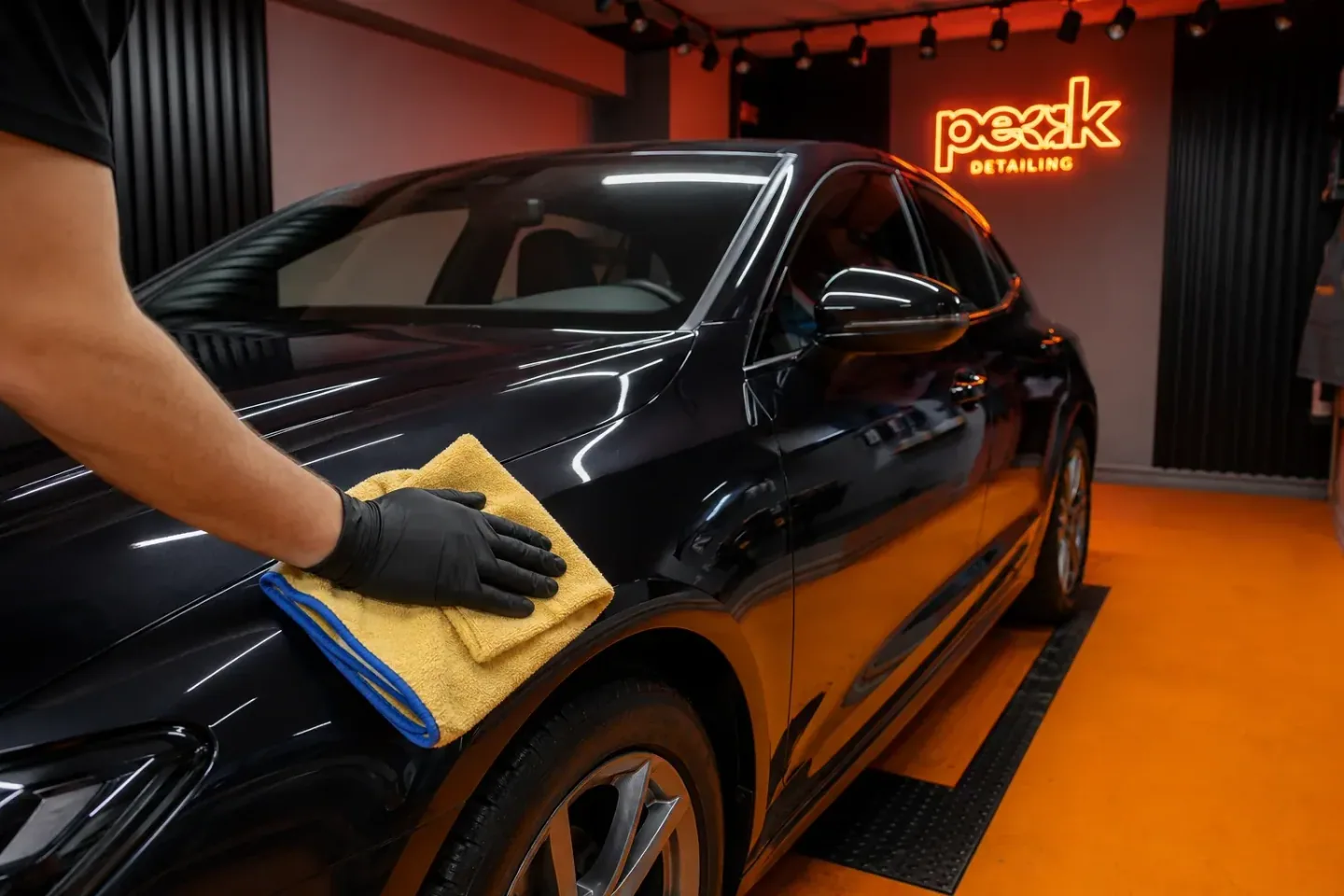
The visual success of a ceramic coating is largely determined by the panel preparation done before application. The coating does not hide scratches, swirl marks, holograms or oxidation.
Examining the car's surface under light. Assessing paint thickness and panel history if needed.14
A safe pre-wash and contact wash; removing iron particles, road film and surface residue with appropriate methods.
Clay treatment if needed, or surface-appropriate mechanical decontamination.
Examining surface defects under light. Applying a test spot if needed and making a measured paint-correction decision.
Removing oil and polish residue with a panel wipe.
Checking the application environment and the panel temperature.
Heavy paint correction is not mandatory on every car. Even brand-new cars can have surface marks from transport, dealer preparation or incorrect washing; the decision should be made based on surface analysis and the test spot result. Unnecessarily aggressive polishing can remove material from the clear coat needlessly.
The visual success of a ceramic coating is most often determined by the surface preparation carried out before the coating bottle is even opened.
How Does the Ceramic Coating Application Proceed?
The application protocol can vary between products. For this reason, the technical instructions for the specific line used matter as much as the coating brand.
- A final check of the prepared panel is carried out.
- Oil and residue are removed with a surface-appropriate panel wipe.
- The coating is applied in small working sections.
- The dwell time specified by the manufacturer is observed.
- Excess product and high spots are leveled out with a clean microfiber.
- If the product protocol requires it, a second layer or top coat is applied.
- The car is placed into its initial curing process in a controlled environment.
- Before handover, the surface is inspected under light.
- The customer is informed about the first few days and the care plan.
Using too much product, arbitrarily increasing the number of layers or applying the same dwell time to every coating is not correct. XPEL notes that for FUSION PLUS coating products, flash time, the wait before wetting and full-cure times can vary by product line and application conditions.8
The Curing Process After Ceramic Coating
Curing is the process by which the coating becomes functional on the surface. The first deliverable state and full curing are not the same thing.
Curing time varies by product line, panel temperature, ambient temperature, humidity and the manufacturer's protocol. For example, the XPEL FUSION PLUS PREMIUM V2 technical documentation gives a wait-before-wetting time of 6 hours and a full-cure time of 3 days. This figure applies only to that particular product line; it cannot be generalized to all ceramic coatings.6
- During the initial sensitive period, contact with water, rain, washing and aggressive chemicals should be avoided.
- The time before the first wash should be set according to the product's current technical instructions.
- If rain or unexpected water contact occurs, the application center should be consulted without rubbing the surface.
- When the car is handed over, care notes specific to the product line should be shared in writing.
How Long Does Ceramic Coating Last?
A ceramic coating's performance duration cannot be explained by the number of years on the label alone. The product line, application standard, parking conditions and washing habits all directly affect visible performance.
Coating lifespan, warranty term and the perceptible level of the hydrophobic effect are not the same concept. Minerals, road film or care residue that build up on the surface can weaken water repellency; this does not always mean the coating is completely finished.
Manufacturer claims should be assessed on a per-product basis. For example, CARPRO CQUARTZ UK 3.0 is stated to offer 18–24 months of real-world durability, while CQUARTZ Lite 2.0 is described as lasting up to two years with proper care. This difference shows why a fixed "ceramic coating lifespan" statement isn't enough.9,10
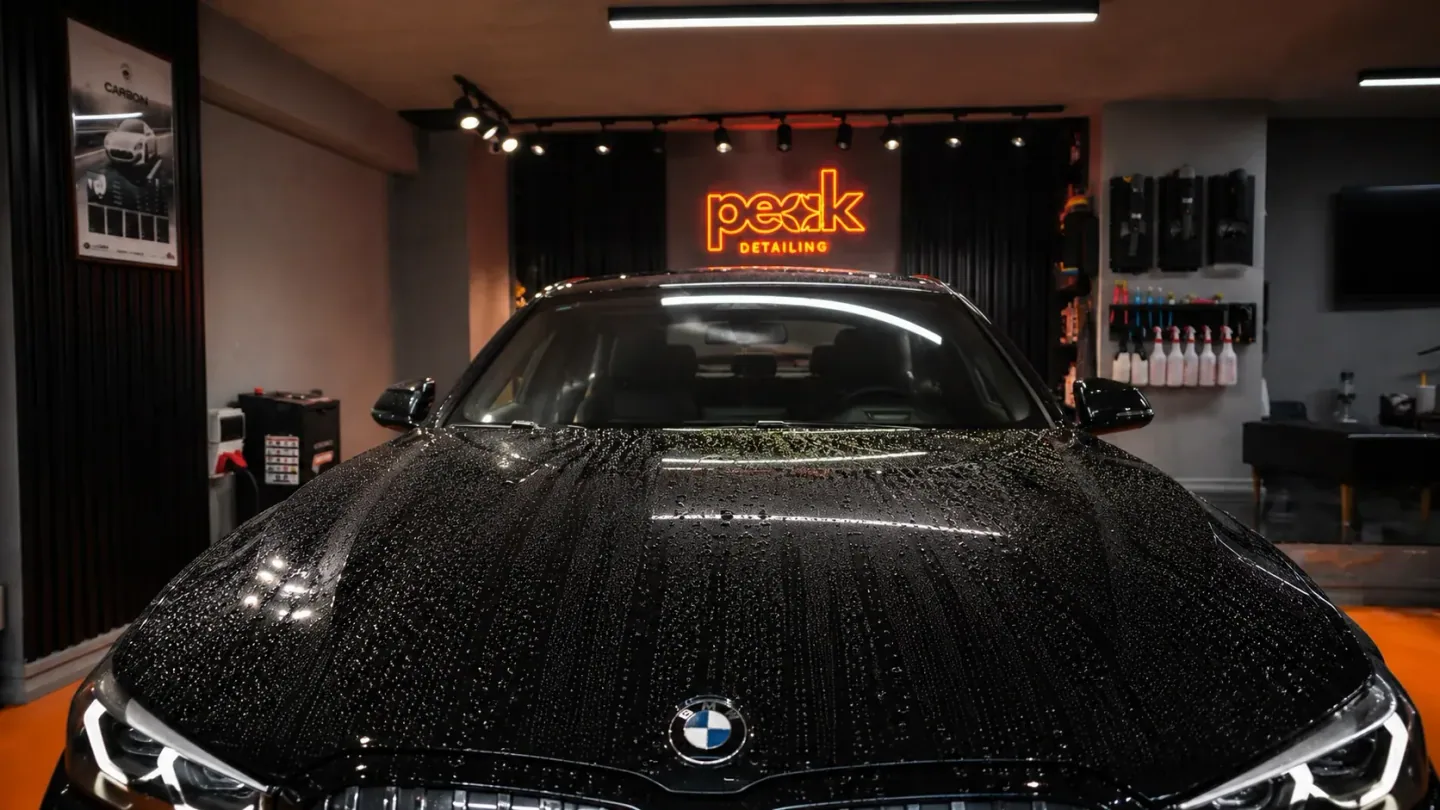
Does Ceramic Coating Completely Prevent Water Spots?
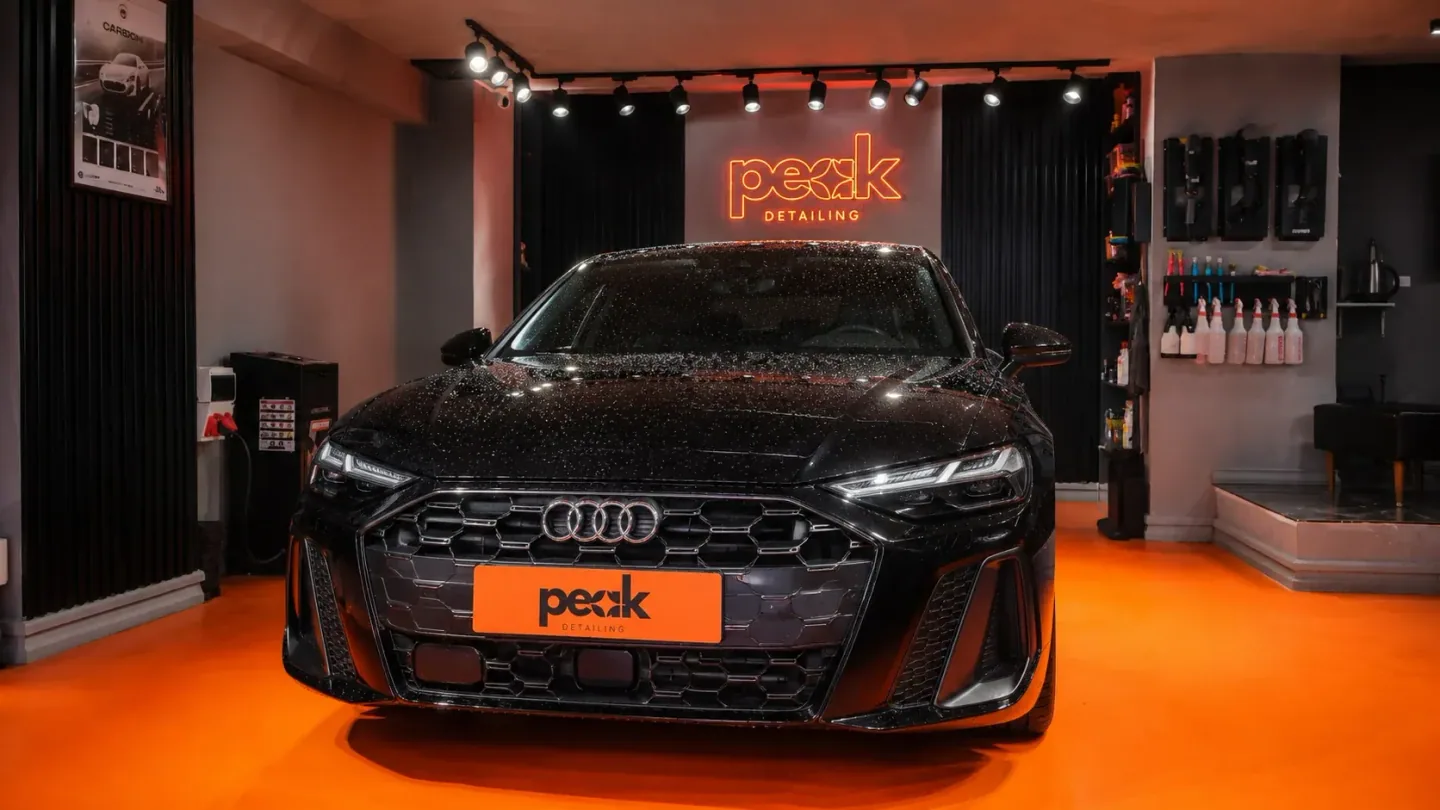
No. The hydrophobic effect helps water move off the surface more easily; but water droplets left on the panel can leave mineral residue when they dry.
Hard water, a hot panel, drying in the sun and incorrect washing all increase the risk of water spots. The CARPRO Spotless 2.0 product description notes that mineral residue can leave marks on the surface and that the process requires a cool panel, rinsing and drying. Gtechniq's wash guide also warns that letting a car dry naturally can create water spots.11,12
- The surface should be dried after washing.
- Bird droppings, insect residue and sap should not be left to sit.
- Water or chemicals should not be left to dry on a hot panel.
- If performance appears reduced, surface contamination should be assessed first.
- If needed, professional care and decontamination should be carried out in line with manufacturer instructions.
Strong water repellency makes maintenance easier; but letting droplets dry on their own on a hot panel is not proper care.
What Determines the Price of Ceramic Coating?
The price of ceramic coating is not set by the bottle's brand alone. The scope of the labor and the current condition of the paint surface directly affect the overall job.
| Factor | Description |
|---|---|
| Car size and number of panels | The labor difference between a small sedan and a large SUV |
| Current condition of the paint surface | Swirl marks, stone chips, oxidation — determines the scope of preparation |
| Decontamination needed | Iron-fallout, clay and surface-residue cleaning |
| Paint correction needed | Based on the test spot result — not mandatory on every car |
| Product brand and line | Topcoat and warranty coverage differ between lines |
| Layer structure / top coat | Some protocols require an extra layer or top coat |
| Additional surfaces | Are wheels, glass or plastic-trim coatings included in the scope? |
| Curing and handover inspection | Controlled environment, final inspection under light |
For an exact price, the car's surface condition, the level of expectations, the product line to be used and the paint preparation required should all be assessed together. Prices given without an inspection may not reflect reality. For package-based starting prices and the factors that determine the price, see our Ceramic Coating Prices 2026 Istanbul guide.
Which Cars Is Ceramic Coating Worth It For?
Ceramic coating makes more sense for owners who expect ease of maintenance and surface appearance — not physical stone-chip protection.
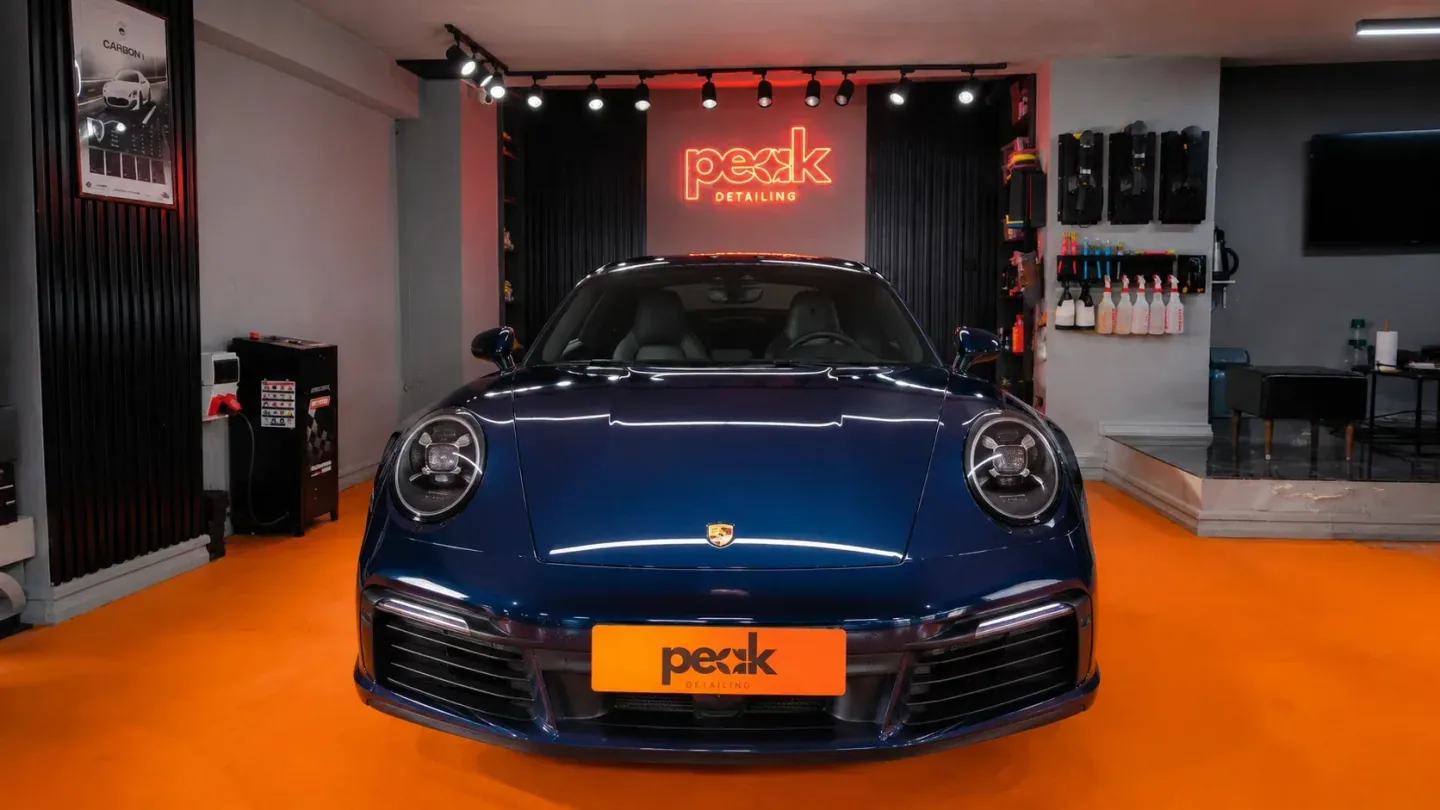
Profiles for whom ceramic coating makes sense
Situations where expectations should be reconsidered
Why Does Ceramic Coating Matter in İstanbul Conditions?
In İstanbul, car paint frequently encounters factors such as open-air parking, long periods in traffic, road film, brake dust, construction-related particulates, bird droppings, sap and irregular washing.
MGM's İstanbul climate statistics show that the average daily hours of sunshine increase markedly during the summer months. Under these conditions, water that dries on a hot panel and organic residue left to sit can weaken the surface appearance more quickly.13
- Heavy city traffic and road film
- Brake dust and particulate build-up
- Open-air parking
- Bird droppings, sap and insect residue
- Moisture and environmental load in coastal areas
- Spotting risk linked to the mineral content of the wash water
- Swirl marks and water spots appearing more pronounced on dark-colored cars
For cars in İstanbul that use open-air parking and are washed irregularly, the most common problem we see isn't just dirt. Bird droppings, sap, insect residue, road film and drying water droplets can weaken the surface appearance in a short time. Ceramic coating does not replace proper care; but it can make the regular maintenance process noticeably easier.
Car owners in and around Maslak can find area-specific process and care details on our ceramic coating in Maslak page.
How to Tell a Good Ceramic Coating Application
A good application is judged not by the product box alone, but by looking at the entire preparation, application and handover process.
- Carrying out a surface analysis before application
- Measuring paint thickness and assessing panel history if needed
- Correct decontamination and a safe wash
- Avoiding unnecessarily heavy polishing
- Making the paint-correction decision based on the test spot result
- Performing the panel-wipe stage correctly
- A dust-free, controlled environment
- Applying the product in line with the manufacturer's instructions
- Observing the correct dwell and wipe-off times
- Checking for high spots
- A final inspection under light
- Informing the customer about the first few days and the care plan
- Explaining the warranty coverage in writing, according to the product line
Quality in ceramic coating is not measured by the bottle's brand alone. Surface preparation, the right product choice, controlled application, curing and the post-handover care plan should all be assessed together.
What Should Aftercare Look Like After Ceramic Coating?
Ceramic coating is not a maintenance-free treatment. Regular, correct washing helps preserve the coating's visible performance.
- For the timing of the first wash, follow the manufacturer's instructions for the product line.
- During the initial sensitive period, avoid unnecessary contact with water and chemicals.
- Clean off bird droppings, insect residue and sap without letting them sit.
- Use a shampoo suitable for the coating and clean microfiber equipment.
- Avoid automatic brush washes.
- Don't let water dry on its own on the panel after washing.
- Don't use aggressive compounds, abrasive products or random chemicals.
- If hydrophobicity weakens, first assess whether there is contamination on the surface.
- Schedule professional care and decontamination if needed.
Frequently Asked Questions
What is ceramic coating?
Does ceramic coating make a car scratch-proof?
What does 9H ceramic coating mean?
Does ceramic coating prevent stone chips?
What is the difference between ceramic coating and PPF?
Is paint correction mandatory before ceramic coating?
Can ceramic coating be applied to a brand-new car?
How many years does ceramic coating last?
Does ceramic coating prevent water spots?
When can a car be washed after ceramic coating?
Can a ceramic-coated car go through an automatic brush wash?
Can ceramic coating be applied over PPF?
When hydrophobicity decreases, is the coating completely finished?
Is ceramic coating more beneficial on dark-colored cars?
Why does the price of ceramic coating vary from car to car?
Sources
The sources below comprise hardness tests, hydrophobic behavior, application protocols, care guides and İstanbul climate data. For the product line, curing time and warranty coverage, the current manufacturer TDS/SDS documentation should be your reference.
- ASTM International. ASTM D3363-22 — Standard Test Method for Film Hardness by Pencil Test. astm.org
- ISO. ISO 15184:2020 — Paints and varnishes — Determination of film hardness by pencil test. iso.org
- ASTM International. ASTM D8597-24 — Standard Test Method for Surface Wettability by Contact Angle Measurement. astm.org
- ISO. ISO 19403-2:2024 — Paints and varnishes — Wettability — Part 2: Contact angle measurement. iso.org
- ISO. ISO 2813:2014 — Paints and varnishes — Determination of gloss value. iso.org
- XPEL. FUSION PLUS™ PREMIUM V2 Ceramic Coating — Technical Data Sheet, R20240510. xpel.com
- XPEL. ULTIMATE PLUS™ Paint Protection Film — Technical Data Sheet. xpel.com
- XPEL. FUSION PLUS Ceramic Coating Resources for Applications — Product Bulletin CC231027TD. xpel.com
- CARPRO. CQUARTZ CQ.UK 3.0 — Official Product Documentation. carpro.global
- CARPRO. CQUARTZ Lite 2.0 — Official Product Documentation. carpro.global
- CARPRO. Spotless 2.0 — Official Product Documentation. carpro.global
- Gtechniq. Comprehensive Wash Guide. gtechniq.com
- Turkish State Meteorological Service (MGM). İstanbul Climate Statistics. mgm.gov.tr
- DeFelsko. How to Use Paint Thickness Gauges for Better Automotive Detailing. defelsko.com