
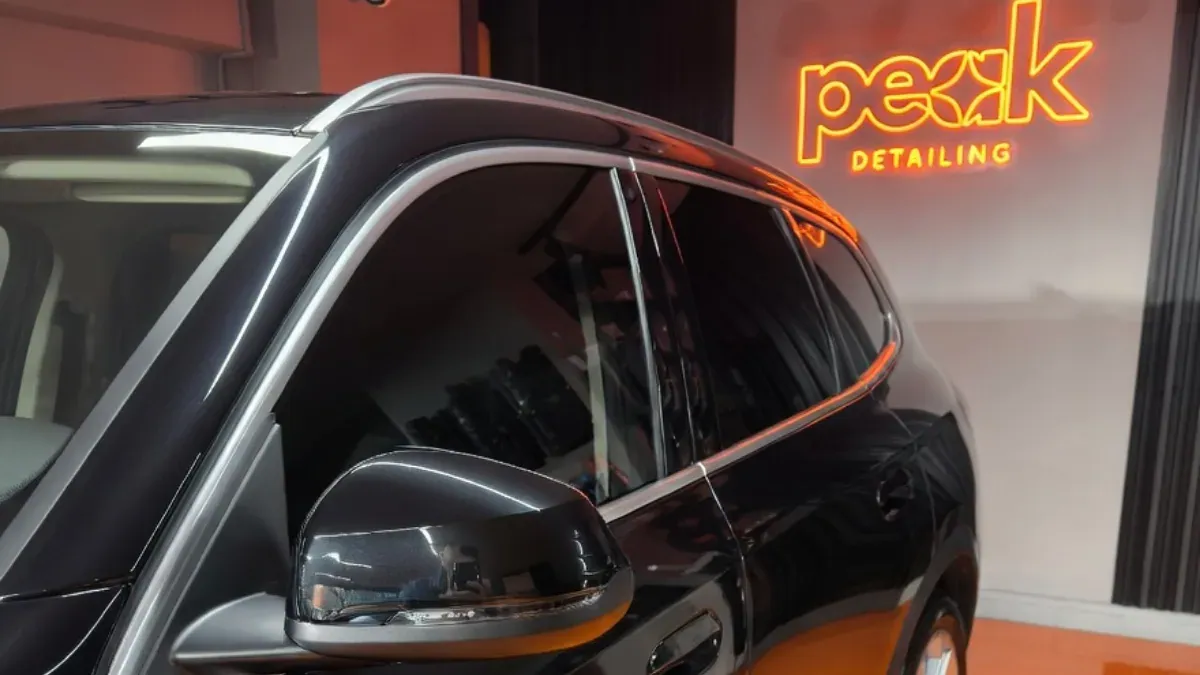
What Does a Window Tint Number Mean?
In Turkey, window tints are commonly graded by "number", a practical shorthand for darkness. The technical equivalent is VLT (Visible Light Transmission) — the percentage of visible light that passes through the glass. A lower number means a lighter film (higher VLT); a higher number means a darker film (lower VLT).
So when you ask "which number", you are really asking "what percentage of light the glass lets through". No. 1 is almost clear and passes most of the light; No. 5 is the darkest shade and blocks most of it. How much heat or UV a film blocks is a separate matter, set by the film's technology (TSER, IR rejection) rather than its darkness. We explain these concepts in our What Is Window Film? guide.
Short answer
Number = darkness indicator. A low number means light / high transmission; a high number means dark / low transmission. On the windshield and front side windows, light transmission must be at least 70%.
Window Tint Numbers and Light Transmission (VLT) Table
The table below summarises the most common number–VLT match on the market and which window each shade suits. Values are approximate and can shift a few points by brand.
| Number | Approx. VLT | Darkness | Suitable glass |
|---|---|---|---|
| No. 1 | ~80–85% | Lightest | All windows (incl. front) |
| No. 2 | ~70% | Light | Front limit (70%) + all windows |
| No. 3 | ~55% | Medium | Rear & rear side windows |
| No. 4 | ~40% | Dark | Rear & rear side windows |
| No. 5 | ~20% and below | Darkest | Rear & rear side windows |
As shown, only No. 1 and No. 2 (VLT ≥ 70%) stay within the front-window limit; No. 3, 4 and 5 belong on the rear glass, not the front.
How Does Each Shade Look? (Outside and Inside)
The real question when choosing a number is "how does this shade sit on the car, and can you still see inside?". The table below summarises each shade's typical look in daylight.
| Number | From outside | From inside | Privacy |
|---|---|---|---|
| No. 1 | Almost clear; film barely noticeable | Fully clear | None |
| No. 2 | Faint smoke tone | Clear | Very little |
| No. 3 | Noticeable but see-through | Clear by day, dimmer at night | Medium |
| No. 4 | Interior hard to see by day | Slightly dark | High |
| No. 5 | Near-black / mirror-like | Distinctly dark, night view drops | Highest |
How does No. 2 (70%) look?
No. 2 (~70%) is the closest look to lightly tinted factory glass. From outside you notice a very faint smoke tone, but the interior stays clearly visible. It is the darkest practical shade that can remain on the windshield and front side windows — the choice for a "tinted but light" appearance.
How does No. 3 (55%) look?
No. 3 (~55%) is the balance point between looks and visibility, and the most popular shade on the rear glass. The interior is still visible from outside in daylight and reads darker at night. It is ideal for those who want "dark but not blacked-out".
Which Window Tint Is the Darkest?
The darkest is No. 5 (about 20% VLT and below), often called the "night" or "limo" shade. It looks near-black / mirror-like from outside and hides the interior — maximum privacy. Because it blocks most of the light, rear visibility at night drops noticeably, so it belongs only on the rear and rear side windows and should be chosen carefully. No. 4 (~40%) is also dark but reduces night vision less than No. 5.
Safety note
A very dark shade looks striking, but don't overlook safety: rear visibility falls as darkness rises, especially at night and in rain. For daily and family use, most drivers settle around No. 3-4 on the rear.
How Much Tint Is Legal on Front Windows?
On the windshield and front side (driver / front passenger) windows the deciding measure is light transmission: at least 70% (VLT ≥ 70%). In practice this is met only by No. 1-2 or a clear, high-transmission UV-IR protective film that does not reduce visibility. No. 3, 4 and 5 are not suitable for these windows; those darker films belong on the rear and rear side glass.
Rules on the rear windows are more flexible and dark shades (No. 3-5) can be applied; the one practical condition is that if the rear windscreen is tinted, the car must have dual exterior mirrors on the left and right.
Honest nuance
This framing is for product selection. The legal side — enforcement and inspection, with current references — is covered separately in our Is Window Tint Illegal in Turkey? 2026 Fines & Legal Limits guide.
This content is not legal advice; current official regulations should be checked before application.
Which Tint Number Should You Choose? (By Car and Use)
There is no single "right number"; the right choice depends on which window and how you use the car:
- Windshield + front side windows: only a high-transmission film (≥ 70% / ~No. 1-2 or a clear UV-IR film). Comfort here comes from film technology, not darkness — even a light shade can cut significant heat with a high TSER / IR rejection.
- Rear + rear side windows (privacy / looks / heat): choose between No. 3-5. For daily and family use, No. 3 is usually the most balanced; those wanting maximum privacy move to No. 4-5; drivers who cover a lot of night miles should avoid very dark shades.
- By car type: SUVs, vans and family cars often go darker on the rear; sedans tend toward balanced shades; aesthetic / performance builds often pair a clear high-tech film on the driving glass with darker rear windows.
Recommendation
Aim for the shade that best suits your use, not the darkest one. Darkness is not required for heat comfort; a quality light film with high TSER / IR rejection can keep the cabin cooler than a low-tech dark one.
Number or VLT? Which Is the Real Measure?
Numbers are a handy shortcut but not standardised — one brand's "No. 3" can differ by a few points from another's. The reliable measure is the product's VLT % (glass + film measured together). Before application, ask for the film's current technical data sheet VLT value; roadside checks also measure this transmission percentage, not the number. In short: start with "which number", but decide by VLT %.
Does Window Tint Pass Inspection?
Again, light transmission decides. On the windshield and front side windows, a clear film that meets the ≥ 70% rule passes periodic inspection; a dark, low-VLT film that reduces visibility can be flagged. Inspection and traffic enforcement are separate processes with the same yardstick. For inspection and enforcement details, see our 2026 Fines & Legal Limits guide.
Choosing the Right Shade in Istanbul / Maslak
The right result comes from applying a quality film at the correct VLT for each window. At its studio in Sarıyer, Istanbul — close to Maslak and the European Side — Peak Detailing helps you decide which number / VLT suits each window based on your car and how you use it, balancing looks with safety.
Our window film service
For a shade and application suited to your car, see our Window Film service page, explore our Maslak window film location, or book an appointment directly. For packages and starting prices, see our window film prices guide. Which brand and series suits you — see our best window film brand guide.
Frequently Asked Questions
What does a window tint number mean?
Which window tint number is the darkest?
How much tint is allowed on the windshield?
How does No. 2 (70%) window tint look?
Is No. 3 (55%) window tint illegal?
Which window tint number should I choose?
Sources
This content is for general information. Tint numbers are an industry convention that varies by brand; the real measure is the product's light transmission (VLT) value. Legal limits can change over time; current official regulations should be checked before application.
- TSE. TS EN 1836 — light transmission measurement standard for glazing and window films on road vehicles. tse.org.tr
- Republic of Türkiye Ministry of Industry and Technology. Regulation on the Manufacture, Modification and Assembly of Vehicles (AITM), Article 14 — glazing and window-film light transmission. mevzuat.gov.tr
- Official Gazette / Legislation Information System. Highway Traffic Law No. 2918 and Highway Traffic Regulation — windshield / front side window visibility rule. mevzuat.gov.tr