
Who Is This Guide For?
Detailed car cleaning is a more comprehensive process than simply removing visible dirt. The aim is to clean different surface types without damaging their structure, use moisture in a controlled way, investigate the source of any odor and hand the car over after sufficient drying.
This guide was prepared in particular for the following users:
- Those who use their car for a long time and want to preserve the interior's appearance
- Families with children and usage profiles where food and drink are frequently consumed in the car
- Users who travel with their pets
- Those buying a used car or preparing their car for sale
- Those bothered by odor caused by cigarettes, food or moisture
- Premium car owners with sensitive surfaces such as leather, Alcantara, piano black and displays
- Those experiencing rapid cabin soiling due to heavy traffic and city use
The Difference Between Standard Cleaning and Detailed Car Cleaning
Standard interior cleaning and interior detailing are different scopes of the same need. While standard cleaning focuses on reducing everyday visible dirt, detailed interior cleaning is a more controlled process planned according to surface type, the source of dirt and drying needs.1
| Criterion | Standard Interior Cleaning | Detailed Interior Cleaning / Detailing |
|---|---|---|
| Goal | Reduce visible dirt | Controlled care suited to the surface |
| Scope | General vacuuming and wiping | Seats, floor, trim, door cards and sensitive areas |
| Product selection | May be general-purpose | Chosen according to surface type and need |
| Moisture control | Variable | Applied in a controlled way according to the surface |
| Drying | Limited follow-up | Checked before handover |
| Sensitive surfaces | General approach | A separate protocol and test area may be needed |
| Odor removal | An odor-masking product may be used | The source is identified first |
Detailing quality is recognized not just by a longer processing time, but by making the right decisions according to the car's needs.
Which Areas Inside the Car Are Cleaned?
In detailed interior cleaning, the scope is determined by the car's usage history and surface composition. The following areas are assessed individually during the initial inspection:
Seat surfaces, gaps between seats and around the rails: Fabric, leather, Alcantara or mixed coverings are handled according to surface type. The gaps between stitching, the sides of the seats and the area around the rails are just as important as the visible areas.
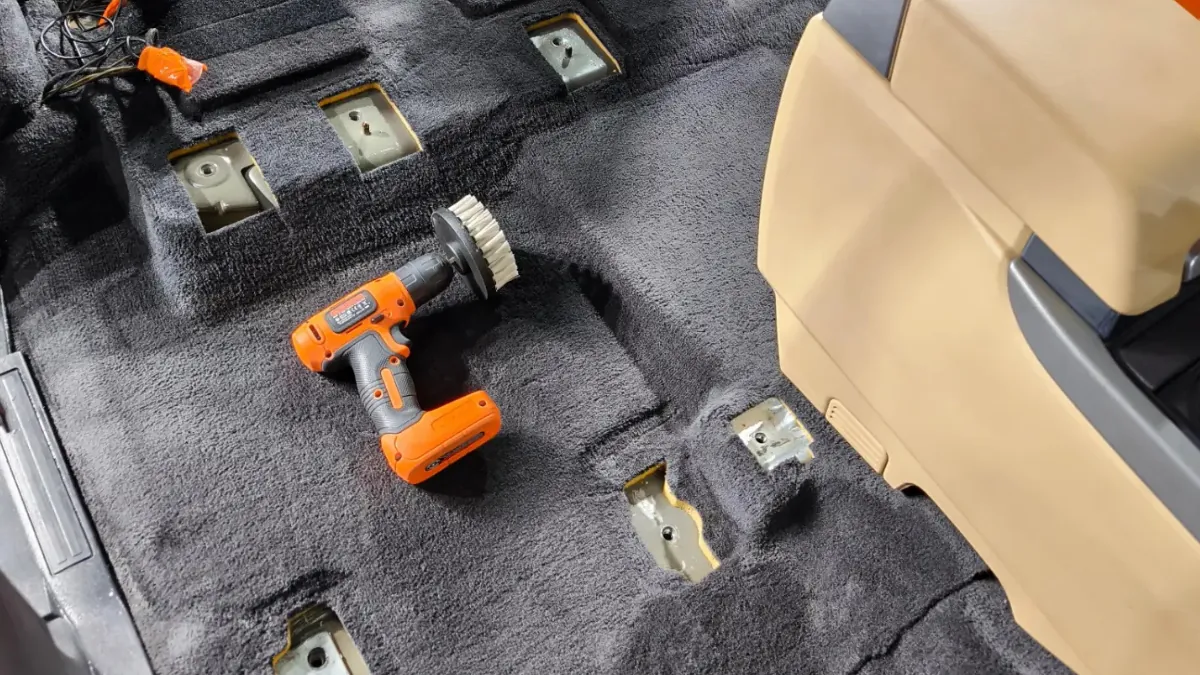
Floor carpeting and mats: Dust, sand, mud and spilled liquids carried in on shoes can accumulate under the mats. Controlled cleaning and drying are needed rather than excessive water use.
Door cards and door pockets: In these areas, where plastic, fabric, leather and metal trim come together, product and cloth selection should be made on a per-area basis.
Center console, dashboard and buttons: Fingerprints, grease and dust accumulate in frequently touched areas. Controlled product use is preferred over heavy direct spraying.
Air vents: Dust that accumulates on the surface is reduced with the help of a gentle brush and vacuum. If there is a persistent odor coming from the air-conditioning system, a separate assessment may be needed.
Display surroundings and glossy trim: Piano black surfaces and displays are prone to scratching. Soft microfiber and limited moisture are required.
Trunk interior: Spilled liquids, wet items, sports equipment or grocery products can be a source of odor.
Headliner: It is not suitable for heavy wetting. A low-moisture, controlled process should be applied, taking the condition of the adhesive into account.
How Does the Detailed Interior Cleaning Process Unfold?
Professional interior cleaning is not the application of a single device to the entire cabin. The process moves from dry dirt to controlled wet cleaning, then to drying and a final inspection:
The cabin is examined under light; surface types, stains, the possibility of odor and sensitive areas are identified.
The customer's belongings are safely set aside; removable mats and accessories are checked.
Loose dirt on the seats, floor, mats, trunk, between the seats and around the rails is removed in the dry stage.
Door pockets, vents, gaps between stitching and hard-to-reach areas are handled with a suitable brush and vacuum.
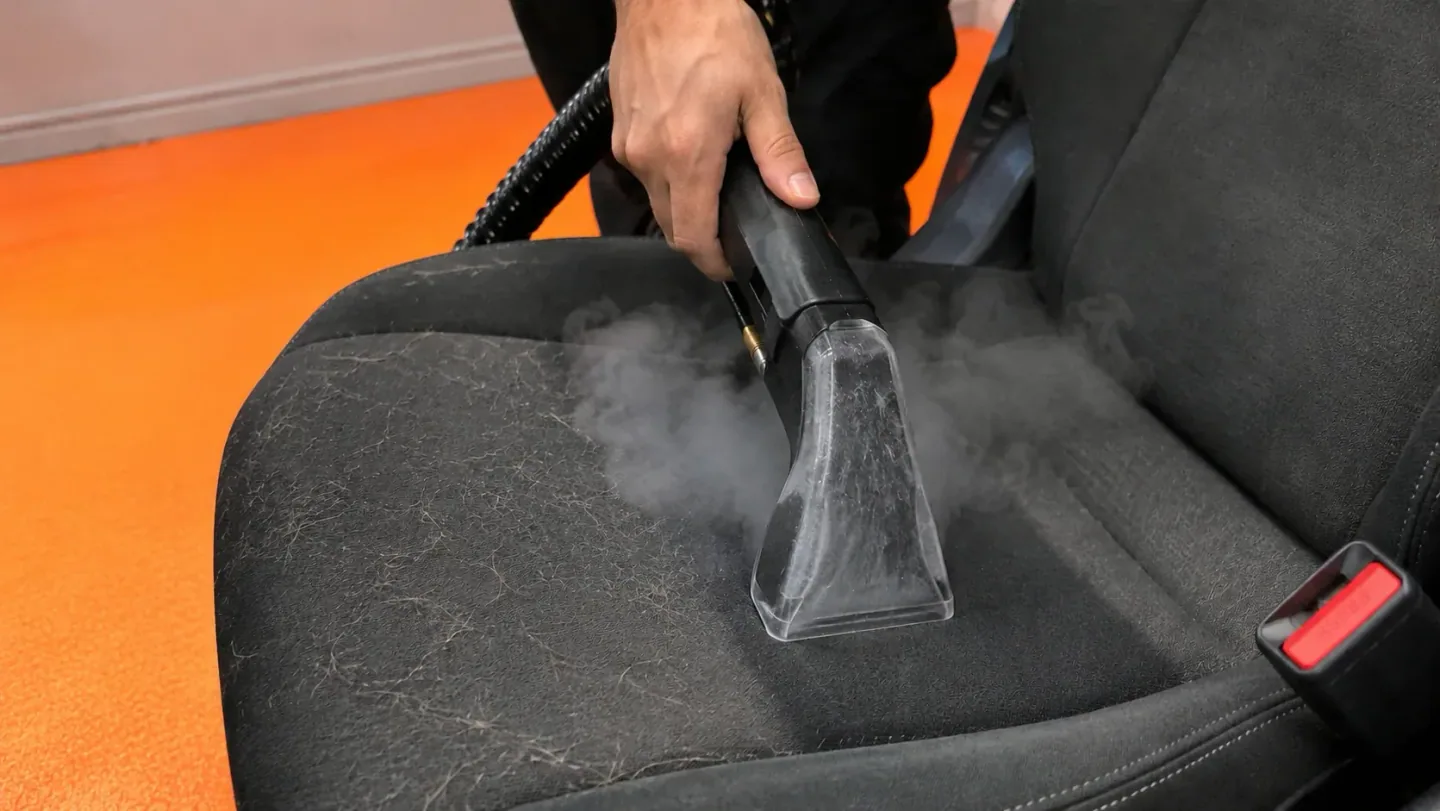
Each surface type is cleaned with a suitable product, controlled moisture and technique. Extraction is used only on suitable surfaces.
The source of odor is investigated; drying is monitored; the car is checked under light and handed over.2
Seats, Floor Carpeting and Fabric Surfaces
The right method on fabric surfaces is to reduce dirt and residue without wetting the surface unnecessarily. Although seats, floor carpeting and mats may look like the same material, they can differ in terms of dirt density, foam padding and drying behavior.
- First, dry dirt is vacuumed as much as possible.
- The stain type and surface durability are assessed; if necessary, a test is done on a small, hidden area.
- The product is not applied directly to the surface in an uncontrolled way; dwell time and mechanical action are kept limited.
- An extraction machine can help on suitable surfaces; however, it is not mandatory or the only right method for every fabric.
- On floor carpet and foam-padded surfaces, unnecessary water use can increase the risk of slow drying and odor.
- At the end of the process, drying and ventilation are monitored.
The approach of "the more water, the cleaner the result" is not correct. A better result is achieved with controlled moisture, the right product and sufficient drying.
How Should Leather Seats Be Cleaned?
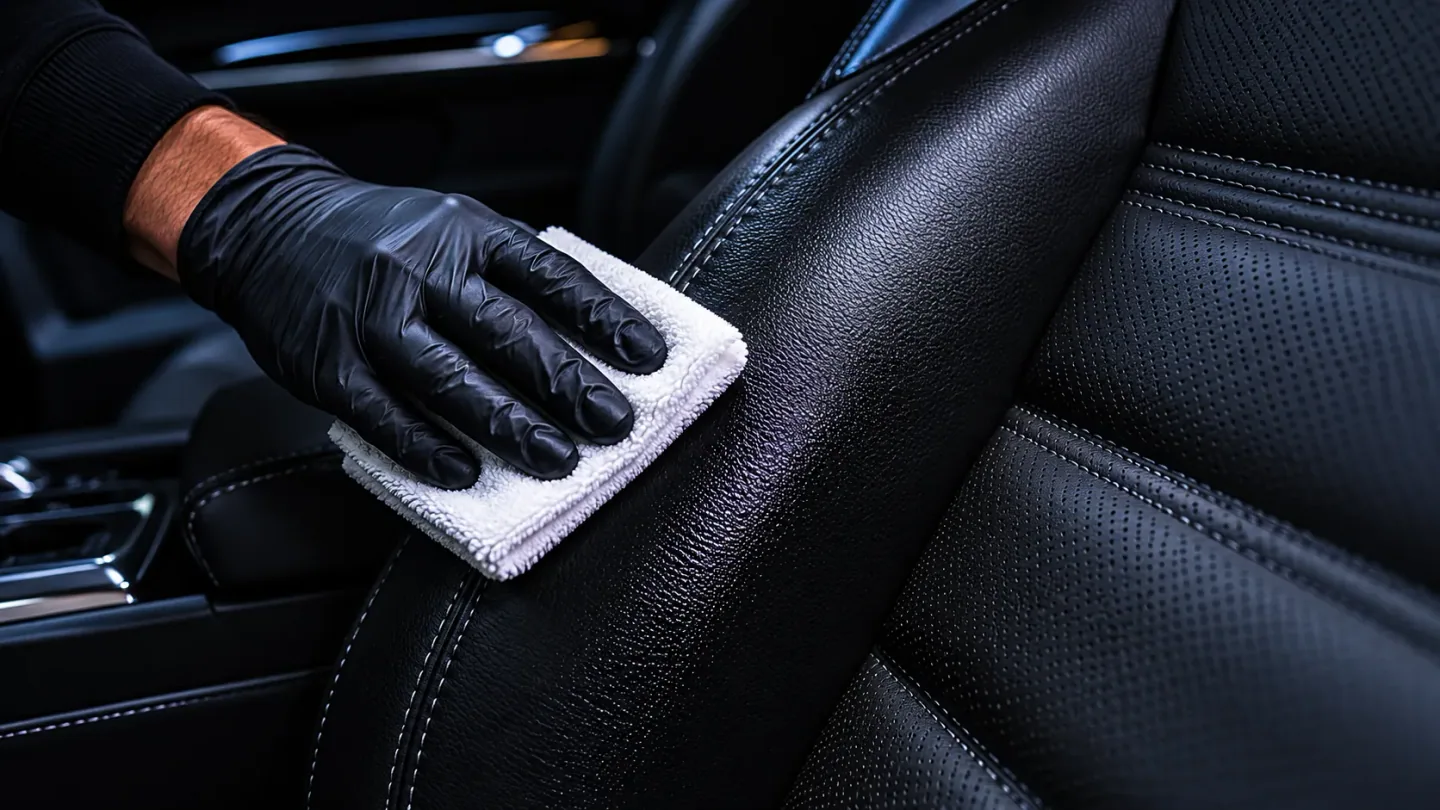
Automotive leather surfaces are not all the same. Natural leather, coated leather, synthetic surfaces and manufacturer-specific materials can have different care instructions. Volvo states that, in order to preserve the original appearance of leather upholstery, it should be vacuumed before using any cleaning product, and that suitable care products should be preferred.3
- The leather surface is first cleared of loose dirt.
- Rather than being sprayed heavily and directly onto the surface, the product is applied in a controlled way with a suitable applicator or microfiber.
- Aggressive brushing, unsuitable chemicals and excess moisture are avoided.
- On perforated leather surfaces, the amount is kept limited so that the product does not fill the holes.
- After cleaning, an overly glossy, wet or greasy-looking surface is not a sign of quality; a natural, balanced appearance is the goal.
In leather care, the goal is not to "shine" the surface, but to proceed gently and carefully enough to preserve its existing appearance.
What to Consider with Alcantara, Piano Black and Sensitive Surfaces?
In premium cars, the greatest risk of error is wiping all surfaces with the same product and cloth. Alcantara, piano black, touchscreens and the area around electronics require a separate protocol.
Alcantara Surfaces
Alcantara's official care instructions recommend not scrubbing the surface hard, not using a steam machine, preferring a soft brush or dry cloth for daily care, and, when needed, proceeding with a well-wrung, slightly damp cloth. The surface should not be over-wetted; once dry, the fiber structure should be gently brushed.4
Piano Black and Glossy Trim
Piano black surfaces show micro scratches easily. Wiping with a dry, dirty cloth, a stiff microfiber or unnecessary pressure increases the risk of scratching. Using a separate, clean and soft microfiber is a safer approach.
Displays and the Area Around Electronics
For display cleaning, the car manufacturer's instructions should be taken as the basis. Tesla's official interior cleaning guide emphasizes avoiding unsuitable chemicals on sensitive areas and not spraying the product heavily directly onto the screen or into button gaps.5
On sensitive surfaces, instead of seeking a quick result, less product, a cleaner cloth and more controlled contact should be preferred.
How Is a Bad Smell Removed from a Car Interior?
A bad smell inside a car is not a single problem; it can be a symptom of different sources. Perfume or odor-masking products can create a short-term change in perception, but when the source is not addressed, the odor can return.
- Smoking: Smoke components can cling to surfaces and dust. It is reported that nicotine levels in cars where smoking has previously taken place can be significantly higher than in non-smoking cars.9
- Spilled drink or food: Residues such as milk, coffee, fruit juice and the like can remain between seats, on the floor or in the trunk.
- Moisture: Rain, wet mats, a leak or a slow-drying cleaning process can cause odor around the floor and trunk.
- Pets: Hair, saliva, paw marks and organic residue can require different methods.
- Around the air-conditioning system: Odor from the cabin filter, the area around the vents or the system itself should be assessed separately.
- Trunk: A wet bag, sports equipment, a spilled product or a hidden source of moisture can be the cause.
In the case of a persistent odor complaint, the source is investigated first. Applying only perfume without assessing under the carpet, under the seats, the trunk and the area around the air-conditioning system gives only a temporary result.
What Does Ozone Treatment Do, and What Doesn't It Do?
Ozone treatment is not a mandatory step on every car and should not be presented like a standard "sterilization" process. Ozone (O³) is a gas too reactive to be considered safe to breathe. The EPA states that the effect of ozone generators in controlling indoor pollutants at concentrations that do not exceed health standards is generally limited.6
CARB explains that high-concentration ozone may have some industrial uses; however, these processes must be carried out under controlled conditions that prevent human exposure.8 In OSHA's standard, the 8-hour time-weighted average occupational exposure limit for ozone is listed as 0.1 ppm.7
- First, the source of the odor is investigated and cleaned as much as possible.
- Ozone is considered only as a supplementary process, and only if necessary.
- The car must be empty during the application; no people, children, pets or plants should be inside the car.
- The duration, device use and ventilation procedure should not be determined in an uncontrolled way.
- After the process, the car should not be returned to use before sufficient ventilation is completed.
- Absolute claims such as "eliminates all bacteria" or "sterilizes the car" should not be used.
Ozone is not a miracle solution that replaces cleaning the source of the odor; it is only a supplementary tool that can be considered in suitable cases, under controlled conditions.
What Determines the Price of Detailed Car Cleaning?
The price of detailed car cleaning is determined not just by the car's segment, but by the interior's actual condition and the scope of work required.
| Factor | Notes |
|---|---|
| Car type and interior volume | Difference in workmanship and time between a small sedan and a large SUV |
| Surface composition | Fabric, leather, Alcantara or mixed — each requires a separate product and time |
| Dirt density | Long-accumulated residue requires more work |
| Pets and organic stains | Hair removal and enzyme-based treatments require separate assessment |
| Persistent odor complaint | Source investigation and, if needed, additional work |
| Prevalence of sensitive surfaces | Alcantara, piano black and displays require a separate protocol and workmanship |
| Controlled drying time | The required ventilation and drying process |
For a precise price, the car's interior, surface types, dirt density and required scope of work should be assessed together. Prices given without an initial inspection may not reflect reality.
Who Is Detailed Interior Cleaning Suitable For?
Detailed interior cleaning is not needed at the same frequency for every car. Its benefit becomes more pronounced in the following usage profiles:
Why Does Detailed Interior Cleaning Matter in İstanbul Conditions?
In İstanbul, car cabins encounter different sources of soiling throughout the year. The Turkish State Meteorological Service's İstanbul statistics show that the city sees high temperatures in the summer months and rainy days for a significant part of the year.10
- Long periods in traffic can create heavier contact marks on the steering wheel, gear shifter, console and door cards.
- On rainy days, mud and moisture carried onto the mats and floor carpeting can accumulate.
- Open parking use can increase the dust and outdoor residue carried into the cabin.
- In summer heat, odor from food left in the car or spilled liquid can be noticed more quickly.
- In coastal areas, moisture and the use of wet items can require additional checks around the trunk and floor.
The most common misconception is to think detailed interior cleaning consists only of strong vacuuming and general wiping. In practice, what determines a quality result is which product is used on which surface, with how much moisture and at what level of contact. In the case of a bad-odor complaint, addressing the source first and considering supplementary processes afterward if needed is a healthier approach.
How Can You Tell a Good Detailed Interior Cleaning Application?
A good result is not just looking clean at first glance. At handover, the surfaces should look natural, the moisture should have been controlled and the detail points should not have been skipped.
- A surface analysis is done before the work.
- The same product and cloth are not used on every surface.
- Product amount and moisture are kept controlled.
- A separate approach is applied to sensitive surfaces such as leather, Alcantara, displays and piano black.
- The gaps between seats, around the rails, the floor, door cards and trunk are not skipped.
- Odor is not just masked with perfume; the source is investigated.
- The drying process is monitored.
- Interior surfaces are not left overly glossy, greasy or wet.
- An inspection under light is done before handover.
- The customer is given basic post-process care guidance.
Frequently Asked Questions
What is detailed car cleaning?
Does cleaning leather seats damage them?
How is Alcantara cleaned?
How are piano black surfaces cleaned?
How is a bad smell removed from a car interior?
Is ozone treatment safe?
What determines the price of detailed car cleaning?
Is detailed interior cleaning necessary after buying a used car?
How often should detailed car cleaning be done?
Can cigarette odor be removed completely?
Can pet hair be completely removed from a car interior?
How long does detailed interior car cleaning take?
Sources
The sources below consist of professional upholstery cleaning standards, manufacturer care instructions, ozone safety references and İstanbul climate data.
- IICRC (Institute of Inspection, Cleaning and Restoration Certification). Professional Upholstery Cleaning Standards. iicrc.org — Upholstery and textile surface cleaning standards.
- U.S. Environmental Protection Agency. The Inside Story: A Guide to Indoor Air Quality. epa.gov — The importance of moisture control and drying indoors.
- Volvo Cars. Interior Care Instructions — Leather Upholstery. volvocars.com — Leather upholstery cleaning and care instructions.
- Alcantara S.p.A. Official Care and Maintenance Instructions. alcantara.com — Alcantara surface care protocol.
- Tesla. Car Interior and Exterior Care Guide. tesla.com — Guide to cleaning displays and sensitive electronic surfaces.
- U.S. Environmental Protection Agency. Ozone Generators that are Sold as Air Cleaners. epa.gov — Ozone generator safety and health effects.
- Occupational Safety and Health Administration (OSHA). 29 CFR 1910.1000 — Air Contaminants (Ozone PEL: 0.1 ppm). osha.gov — Occupational ozone exposure limit.
- California Air Resources Board. Hazardous Ozone-Generating Air Purifiers. ww2.arb.ca.gov — Ozone generator consumer warning.
- Matt Sleiman et al. Thirdhand Tobacco Smoke: Emerging Evidence. Environmental Health Perspectives. ncbi.nlm.nih.gov — Nicotine accumulation on car surfaces.
- Turkish State Meteorological Service. İstanbul Climate Statistics. mgm.gov.tr — İstanbul temperature and precipitation data.