Is PPF Harmful? The Short, Clear Answer
PPF is designed as a sacrificial protection layer over the paint: the film absorbs impact, abrasion and chemicals instead of the paint. It is manufactured to be professionally removable when needed. The perception that "PPF is harmful" rarely comes from the technology itself; it comes from three bad factors combined: low-quality film + poor installation + wrong removal. When these three variables are handled correctly, PPF is a safe investment that protects the original paint.
| Claim | Fact |
|---|---|
| "PPF ruins the paint" | The adhesive is engineered for automotive clear coat; it does not dissolve the paint, it isolates and protects it. |
| "It pulls the paint off on removal" | On factory paint, within lifespan, with professional removal, the clear coat does not lift. |
| "It yellows after a while" | Quality aliphatic TPU stays clear 7–10 years; yellowing is a cheap/PVC-film problem. |
| "The paint rots underneath" | With proper installation no moisture is trapped; the film isolates paint from UV and chemicals. |
Does PPF Damage the Paint While It's On the Car?
No. PPF forms a physical barrier between the paint and the outside world. The clear coat — the outermost, thin layer of the paint system — is separated by the film from direct contact with stone chips, UV, bird-dropping acids, insect residue and industrial fallout. The film's adhesive is a pressure-sensitive adhesive engineered for automotive clear coat; it does not "eat" or chemically dissolve the paint.
In fact, the paint underneath generally stays in better condition: protected from UV fading, light scratches and chemical stains, the clear coat remains sound for longer. The only things to watch are edge care and renewing the film on time once its lifespan ends.
Does the Clear Coat Come Off When PPF Is Removed?
This is the most common trust question. If the factory (OEM) paint is sound and removal is done professionally within the film's lifespan, the paint or clear coat does not lift when PPF is removed. Manufacturers such as XPEL state that the film is engineered to be removed without harming the paint or leaving residue when done correctly.
Lift risk increases only in exceptional cases:
- Repainted / spot-painted panels: If aftermarket paint's bond to the clear coat is weaker than the film's adhesive, paint can lift during removal.
- Poorly cured respray / touch-up: Paint that hasn't fully hardened is risky during removal.
- Thin or damaged surface: Previously abraded, very thin or compromised paint.
- Film left far beyond its lifespan: The adhesive hardens over time; late removal gets harder.
- Amateur / DIY removal: Peeling cold, without heat, with metal tools, too fast and at too steep an angle stresses the clear coat.
Correct removal: the film is warmed, peeled slowly at about 45°, and any remaining adhesive is cleaned with a paint-safe adhesive remover. This is why removal — like installation — is a professional job.
| Scenario | Paint risk | Why |
|---|---|---|
| Factory paint + within lifespan + professional removal | Very low | Clear-coat-to-paint bond stronger than film; controlled heat and angle |
| Repainted / spot-painted panel | High | Aftermarket paint adhesion may be weak |
| Poorly cured touch-up | High | Paint not fully hardened |
| Film far past its lifespan | Medium-high | Adhesive hardens, removal harder |
| Cold / no-heat / metal-tool DIY removal | High | Mechanical stress on clear coat |
Does PPF Turn Yellow?
Quality aliphatic TPU films containing UV absorbers typically retain color stability for 7–10 years — subject to manufacturer warranty — without visible yellowing. Yellowing mainly occurs with low-quality films: PVC-based or poorly stabilized/recycled materials degrade under UV through photo-oxidation, and under high humidity and heat hydrolysis weakens the polymer, causing haze or yellowing.
The key point: yellowing is in the film itself, not the paint. When the film is renewed, the paint underneath remains intact. To avoid it, choose UV-stabilized TPU with an aliphatic topcoat and check that the current warranty covers yellowing.
When getting a quote, "how many years of warranty?" isn't enough on its own. The film's brand and series, material type (TPU/TPH/PVC), topcoat structure and the warranty's coverage of yellowing, cracking and blistering should be verified from the manufacturer's technical data sheet (TDS).
The Real Risk: Wrong and Amateur Installation
In practice, most "PPF damaged my car" cases come not from the film but from faulty installation. The most common problems:
That's why surface prep (decontamination, IPA wipe-down), a dust-free filtered booth and a center-out squeegee technique are critical. DIY kits in inexperienced hands multiply these risks. In short, the outcome is determined not by PPF itself, but by whether it's done correctly. You can follow the correct process step by step in our guide How is PPF installed?.
PPF Actually Protects the Paint and Raises Resale Value
Done right, PPF is not "damage" — it's a protection investment. When damage occurs, in most cases it's the film that suffers; when the film is renewed, the original paint has stayed in better shape. This is one of the strongest ways to preserve a car's resale value.
Conversely, a poor DIY install with visible bubbles and lifting edges lowers a car's perceived value even if the paint underneath is pristine. So the real question isn't "Is PPF harmful?" but "Who is installing it, with which film, and how?"
Quality Film vs. Cheap Film
Much of the safety difference comes from the material. TPU is the professional standard: flexible, clear, high UV resistance and self-healing capable. TPH is mid-tier and PVC is the economy tier; PVC-based products carry a higher risk of stiffness, low clarity and yellowing under UV.
You'll find the technical detail on material types, layer structure and brand comparison in our What Is PPF Coating guide; this article deliberately focuses on the "harm/safety" side.
Why Warranty and the Right Installer Matter
Manufacturer warranties typically cover film defects (yellowing, cracking, blistering, delamination) and require professional installation; the warranty covers the film, not the paint itself. So when getting a quote, don't just ask "how many years of warranty?" — evaluate the film's brand and series, the technical data sheet (TDS), the warranty scope and a certified installer together.
The right installer is the real factor that keeps the paint safe both at installation and at future removal. See our PPF coating service page for packages and process, and our PPF Prices 2026 guide for current budget ranges. If the paint is in poor condition before installation, paint correction should be considered first.
Is PPF Safe in Istanbul Conditions?
Yes — but the conditions make the choice of quality and installer even more important. Istanbul's intense summer sun and high panel temperatures, the salty humidity of coastal areas (Sarıyer and the European Side around Maslak) and city-traffic fallout can accelerate yellowing and edge issues on cheap films.
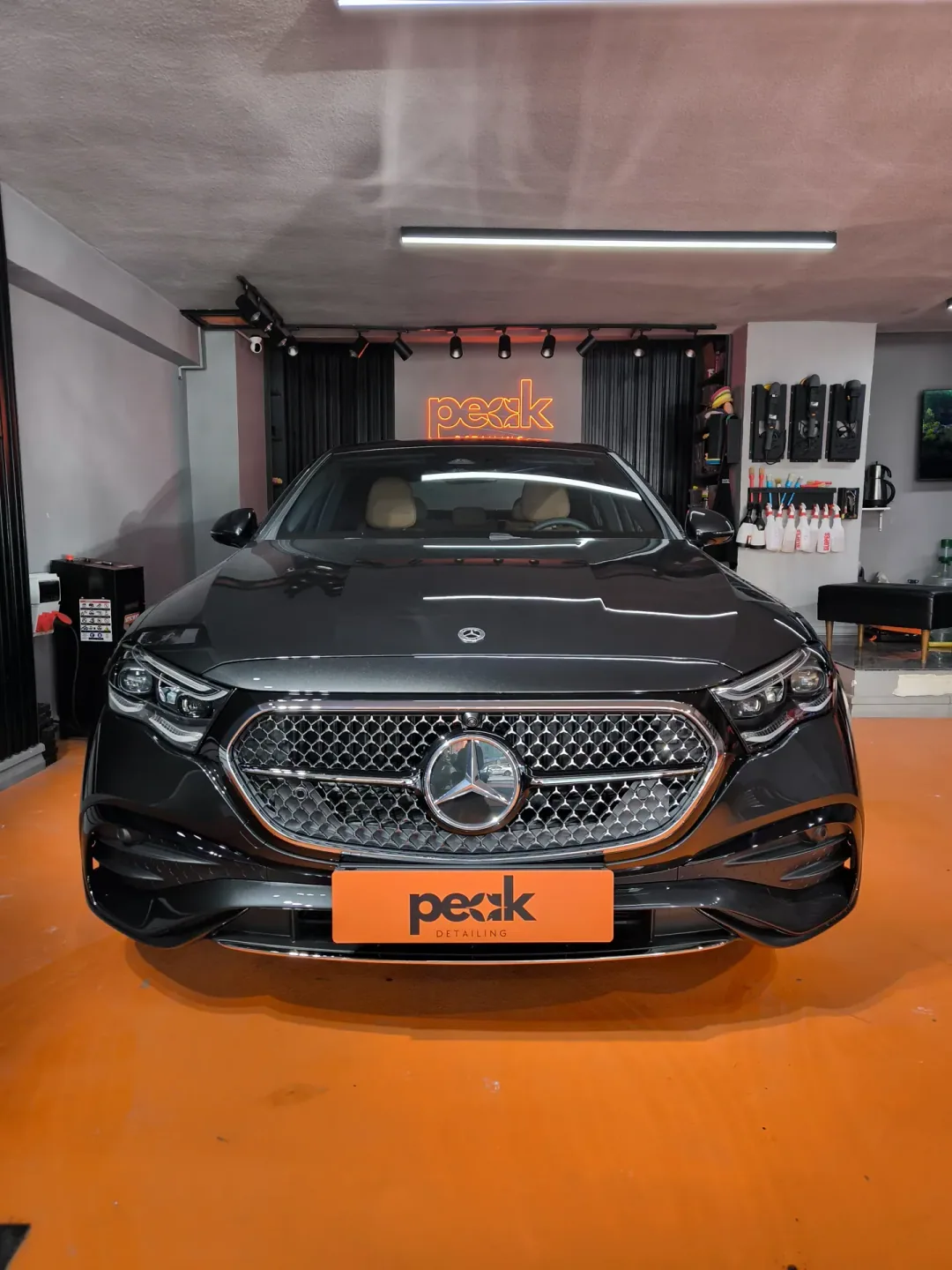
In this climate, UV-stabilized aliphatic TPU film applied professionally in a dust-free booth effectively eliminates the "harm" risk. Peak Detailing applies PPF in its Sarıyer, Istanbul studio — close to car owners in Maslak and the European Side — with paint-thickness measurement and surface inspection.
Frequently Asked Questions
Does PPF damage paint?
Does the clear coat come off when PPF is removed?
Does PPF turn yellow?
Can improper or amateur PPF installation damage paint?
Does PPF protect the original paint?
Does PPF leave marks or adhesive residue when removed?
Is the PPF risk the same on factory paint and a repainted panel?
Sources
The sources below consist of manufacturer warranty/care documents, film material literature, accelerated weathering test standards and Istanbul climate data. Brand, series and warranty details can change over time, so the current manufacturer or distributor document should be taken as the basis before installation.
- XPEL. Warranty Information. xpel.com
- XPEL. Product Care & Removal — Frequently Asked Questions. xpel.com
- SunTek. Reaction Paint Protection Film (Technical Data). suntekfilms.com
- STEK USA. DYNOshield Hydrophobic Paint Protection Film. stek-usa.com
- 3M. Scotchgard Paint Protection Film Pro Series. 3m.com
- HEXIS Graphics. BODYFENCE Paint Protection Film Technical Data Sheet. hexis-graphics.com
- ASTM International. ASTM D7869 — Xenon Arc Exposure Test for Transportation Coatings. astm.org
- SAE International. SAE J2527 — Accelerated Exposure of Automotive Exterior Materials. sae.org
- Turkish State Meteorological Service (MGM). Istanbul climate data and seasonal normals. mgm.gov.tr